The first step to using analytics for organic traffic is tracking who’s visiting your site and what they’re doing. Tools like Google Analytics show you how many people come from search, which pages they like, and where they leave. This allows you to identify what’s effective and what’s not, enabling you to make informed decisions to attract more visitors and retain them.
Key Takeaways
- Use Google Analytics to track user behavior and measure organic search traffic effectively.
- Monitor key metrics like sessions, users, bounce rate, and time on page for insights.
- Utilize Google Search Console to assess website presence and identify optimization opportunities.
- Analyze data to uncover content gaps and keyword opportunities for better targeting.
- Regularly refine SEO strategies based on performance insights to sustain organic growth.
Why Tracking Organic Traffic Matters for Your Business
Tracking organic traffic is essential for your business because it directly influences your long-term growth. By analyzing this data, you can uncover insights that lead to smarter decision-making and better strategies. Ultimately, understanding your organic visibility helps you stay competitive in your industry.
The link between organic visibility and long-term growth
While many businesses focus on immediate sales and conversions, understanding the nuances of organic traffic can substantially impact your long-term growth. By improving your organic visibility, you’re not just attracting visitors; you’re building brand authority and trust. This is where effective organic traffic growth strategies come into play. When you monitor organic traffic, you can identify which content resonates with your audience and refine your approach. This iterative process leads to better engagement and higher rankings on search engines. Ultimately, a robust organic presence fosters sustainable growth, as it reduces reliance on paid campaigns and enhances customer loyalty. In the long run, investing in organic visibility pays dividends, ensuring your business thrives in a competitive digital landscape.
How data-driven insights improve decision-making
Understanding your organic traffic isn’t just a nice-to-have; it’s vital for making informed business decisions. By leveraging data-driven insights, you can effectively track website visitors and measure organic search traffic. Utilizing website traffic analysis tools helps you monitor keyword performance and track pageviews and sessions, allowing you to identify trends and optimize strategies. User behavior analytics reveal significant information about landing page performance and bounce rate optimization. In addition, conversion tracking in analytics provides clarity on your SEO performance metrics, enabling you to differentiate between referral and organic traffic. Ultimately, analyzing search engine visibility and engaging in website performance monitoring empowers you to make strategic decisions that enhance your online presence and drive growth.
Key Analytics Tools for Monitoring Organic Traffic
To effectively monitor your organic traffic, you’ll want to utilize key analytics tools that provide valuable insights. Google Analytics and Google Search Console are essential for tracking performance, but don’t overlook the benefits of third-party SEO tools for deeper analysis. These resources can help you make informed decisions to boost your online presence.
Google Analytics and Google Search Console
When you want to effectively monitor and enhance your organic traffic, Google Analytics and Google Search Console are essential tools that can provide invaluable insights. Google Analytics for SEO allows you to track user behavior, understand traffic sources, and measure conversion rates. By analyzing this data, you can identify which pages perform well and which need improvement. On the other hand, Google Search Console helps you monitor your website’s presence in Google search results, offering information on search queries, indexing status, and potential issues. Together, these tools give you a thorough view of your website’s performance, enabling you to make data-driven decisions to improve your organic traffic and optimize your SEO strategies effectively.
Third-party SEO tools that provide deeper insights
Several third-party SEO tools can provide deeper insights into your organic traffic, complementing the data from Google Analytics and Google Search Console. These tools help you understand your site’s performance and identify areas for improvement. Here are three popular options:
- Ahrefs: This tool offers a thorough backlink analysis, keyword research, and competitor insights to enhance your SEO strategy.
- SEMrush: With powerful features for tracking rankings, analyzing competitors, and conducting site audits, SEMrush helps you optimize your content effectively.
- Moz: Known for its user-friendly interface, Moz provides metrics like Domain Authority and keyword suggestions to boost your SEO efforts.
Important Metrics to Watch Closely
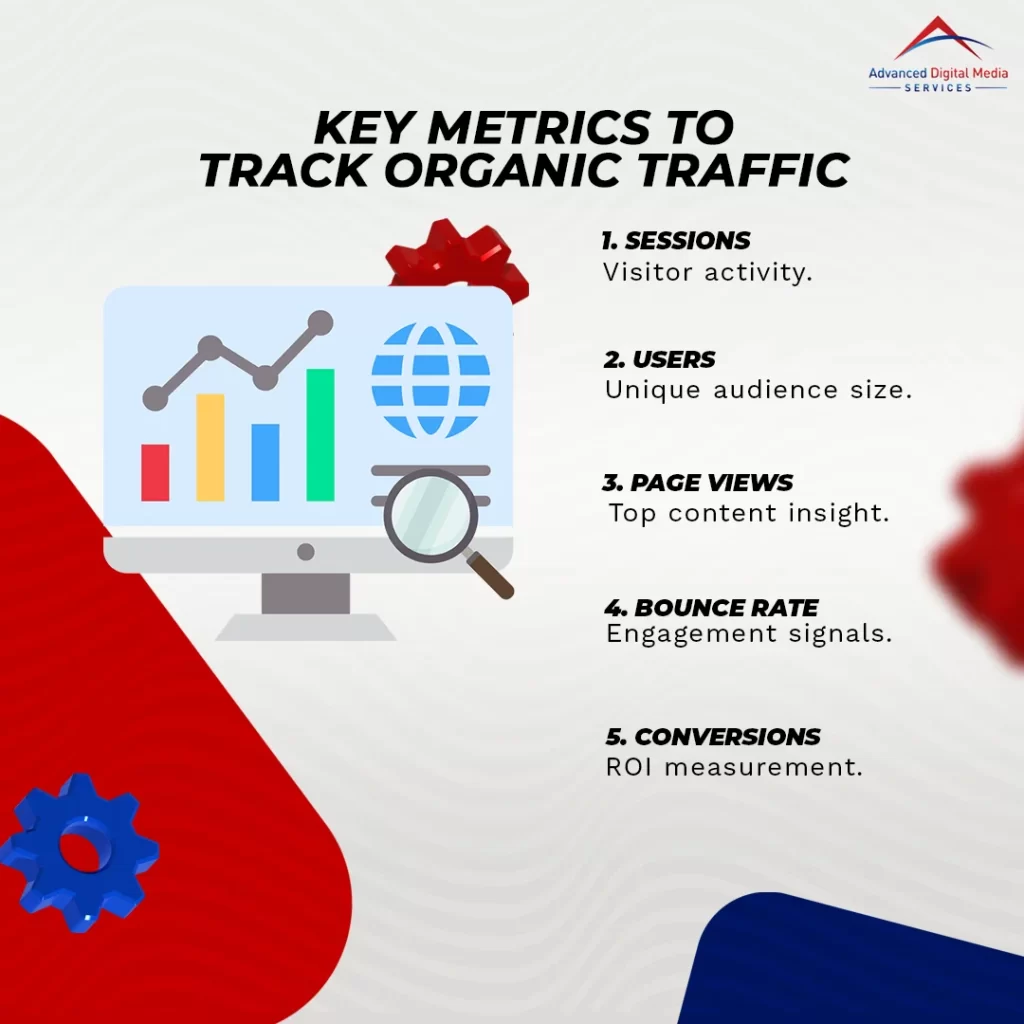
When you’re analyzing your organic traffic, there are key metrics that deserve your attention. Sessions, users, and page views from organic search can reveal how well your content is resonating with visitors. Additionally, keeping an eye on bounce rates, time on page, and conversion rates will help you understand engagement and effectiveness.
Sessions, users, and page views from organic search
Understanding sessions, users, and page views from organic search is essential for evaluating your website’s performance and identifying areas for improvement. These metrics provide insights into how well your site attracts and engages visitors. Here are three key metrics to monitor:
- Sessions: This represents the total number of visits to your site, showing how often users engage with your content.
- Users: This metric counts unique visitors, helping you understand your audience size and how well you’re reaching new potential customers.
- Page Views: This indicates the total number of pages viewed, revealing which content resonates most with visitors.
Bounce rate and time on page as engagement indicators
While analyzing your website’s performance, monitoring bounce rate and time on page can provide valuable insights into user engagement. A high bounce rate often indicates that visitors aren’t finding what they expected, which might signal the need for content improvement or better alignment with user intent. Conversely, a lower bounce rate suggests that users are sticking around, exploring your site further.
Time on page serves as another essential metric; longer duration typically reflects higher engagement levels. If users are spending more time on specific pages, it might indicate that your content is resonating well with them. By closely tracking these metrics, you can identify areas for enhancement, ultimately leading to a more engaging and effective online experience.
Conversion rates tied to organic visitors
Monitoring user engagement metrics like bounce rate and time on page isn’t just about understanding how visitors interact with your site; it also sets the stage for analyzing conversion rates tied to organic visitors. By focusing on these rates, you can fine-tune your strategies and boost your ROI. Here are three key factors to evaluate:
- Target Audience Alignment: Verify your content resonates with your intended audience for better engagement and conversions.
- Call-to-Action Effectiveness: Test different CTAs to find out what encourages organic visitors to take action.
- User Journey Analysis: Track the paths organic visitors take to identify bottlenecks or drop-off points that hinder conversions.
How to Turn Analytics Data into Action
Now that you know which metrics to track, it’s time to put that data to work. You can identify high-performing pages and replicate their success, spot content gaps, and uncover keyword opportunities. Plus, measuring your ROI from SEO efforts will help you refine your strategy and drive even better results.
Identifying high-performing pages and replicating success
To effectively boost your organic traffic, it’s crucial to identify high-performing pages within your website and leverage their strengths. Start by analyzing your analytics data to pinpoint these pages, then follow these steps to replicate their success:
- Examine Content Quality: Look at what makes these pages stand out. Is it the writing style, depth of information, or visuals?
- Assess User Engagement: Check metrics like average time on page and bounce rates. High engagement often indicates valuable content.
- Optimize for Keywords: Identify the keywords driving traffic to these pages and make sure you’re targeting similar terms in new content.
Spotting content gaps and keyword opportunities
While analyzing your website’s analytics data, you might uncover valuable insights into content gaps and keyword opportunities that can greatly enhance your organic traffic. Look for keywords that have high search volume but low competition; these represent prime opportunities to create targeted content. Check your top-performing pages to identify related topics that aren’t fully addressed. This allows you to fill in gaps and provide thorough information that can attract more visitors. Additionally, monitor user behavior to see what content engages them most. If certain topics lead to higher bounce rates, consider revising or expanding those sections. By addressing these content gaps and leveraging keyword opportunities, you can effectively boost your site’s visibility and drive more organic traffic.
Measuring ROI from SEO efforts
As you explore your analytics data, understanding how to measure ROI from your SEO efforts becomes essential for justifying your investments. To truly gauge the effectiveness of your strategies, focus on these key metrics:
- Organic Traffic Growth: Track the increase in visitors from search engines to see if your SEO tactics are working.
- Conversion Rates: Analyze how many of those visitors take desired actions, such as signing up or making a purchase.
- Cost Per Acquisition (CPA): Calculate how much you’re spending to acquire each customer through organic search, allowing you to assess the profitability of your efforts.
Boost Your Organic Growth with Advanced Digital Media Services
If you’re looking to enhance your organic growth, Advanced Digital Media Services has the expertise you need. Their professional SEO strategies, supported by in-depth analytics, guarantee your website is optimized for maximum visibility. With ongoing monitoring and optimization, you’ll achieve sustainable results that boost traffic and engagement.
Professional SEO strategies backed by in-depth analytics
In the ever-evolving digital landscape, businesses can’t afford to overlook the power of professional SEO strategies backed by in-depth analytics. These strategies not only enhance your website’s visibility but also drive meaningful traffic. Here’s how you can leverage analytics for effective SEO:
- Data Analysis: Understand user behavior and preferences by analyzing traffic sources and patterns.
- Keyword Optimization: Identify high-performing keywords and adapt your content to target them effectively.
- Performance Tracking: Monitor key metrics like bounce rates and conversion rates to refine your strategies.
Ongoing monitoring and optimization for sustainable results
Ongoing monitoring and optimization are key to maintaining your website’s visibility and performance over time. By regularly analyzing your organic traffic, you can identify trends, spot issues, and make informed adjustments. This proactive approach helps you stay ahead of algorithm changes and evolving user preferences.
Utilizing tools like Google Analytics enables you to track key performance indicators, such as bounce rates and conversion metrics. With this data, you can refine your SEO strategies, ensuring your content remains relevant and engaging.
Don’t forget to assess your competitors, too. Understanding their tactics can provide insights to enhance your own approach. Ultimately, consistent monitoring and optimization foster sustainable growth, keeping your brand prominent in search results and attracting valuable traffic.
Contact ADMS today to maximize your website’s visibility and traffic
Boosting your website’s visibility and organic traffic is within reach when you partner with Advanced Digital Media Services. By choosing ADMS, you’ll gain access to expert strategies that elevate your online presence. Here’s how we can help:
- Tailored SEO Strategies: We analyze your specific needs to implement effective SEO techniques that drive traffic.
- Comprehensive Analytics: Our team uses data-driven insights to continuously optimize your website’s performance.
- Ongoing Support: You’ll receive dedicated assistance to adapt to changing market trends and maintain growth.
Don’t let your competitors outshine you. Contact ADMS today to maximize your website’s visibility and traffic. Let’s work together to create a digital strategy that truly reflects your brand and achieves your goals!
Frequently Asked Questions
How Often Should I Check My Organic Traffic Analytics?
You should check your organic traffic analytics at least once a week. This regular monitoring helps you identify trends, make timely adjustments, and stay informed about your website’s performance to guarantee ongoing growth and visibility.
What Is the Difference Between Organic and Paid Traffic?
Organic traffic comes from unpaid search results, while paid traffic stems from advertisements. You’ll find organic traffic builds credibility and trust, while paid traffic offers immediate visibility and control over your messaging and audience targeting.
Can Social Media Impact My Organic Traffic Results?
Yes, social media can greatly impact your organic traffic results. By engaging with your audience and sharing valuable content, you’re likely to drive more visitors to your site, enhancing your overall online presence and visibility.
How Do Seasonal Trends Affect Organic Traffic?
Seasonal trends can skyrocket your organic traffic! They create fluctuations in search behavior, so you’ll want to adjust your content and strategies accordingly. Embrace these changes to maximize visibility and engagement during peak times.
What Are Common Mistakes When Analyzing Organic Traffic Data?
You might overlook important metrics, focus too much on short-term fluctuations, or ignore user behavior trends. Not segmenting data properly can lead to misleading conclusions, so always analyze with a thorough, long-term perspective in mind.
Conclusion
In today’s digital landscape, tracking your organic traffic isn’t just beneficial—it’s essential. Did you know that businesses that actively analyze their traffic can see up to a 20% increase in conversions? By leveraging the insights from analytics tools, you can identify what works and what doesn’t, allowing you to refine your strategies. Embrace data-driven decisions, and watch your website’s performance soar. Start harnessing the power of analytics today to fuel your growth!