To write effective meta tags for SEO, you need to create short, clear titles and descriptions that tell people exactly what your page is about. Your title should use important keywords and stay under 60 characters, while your description should be around 150–160 characters and encourage people to click. When your meta tags are well-written, they help your site show up higher on Google and attract more visitors.
Key Takeaways
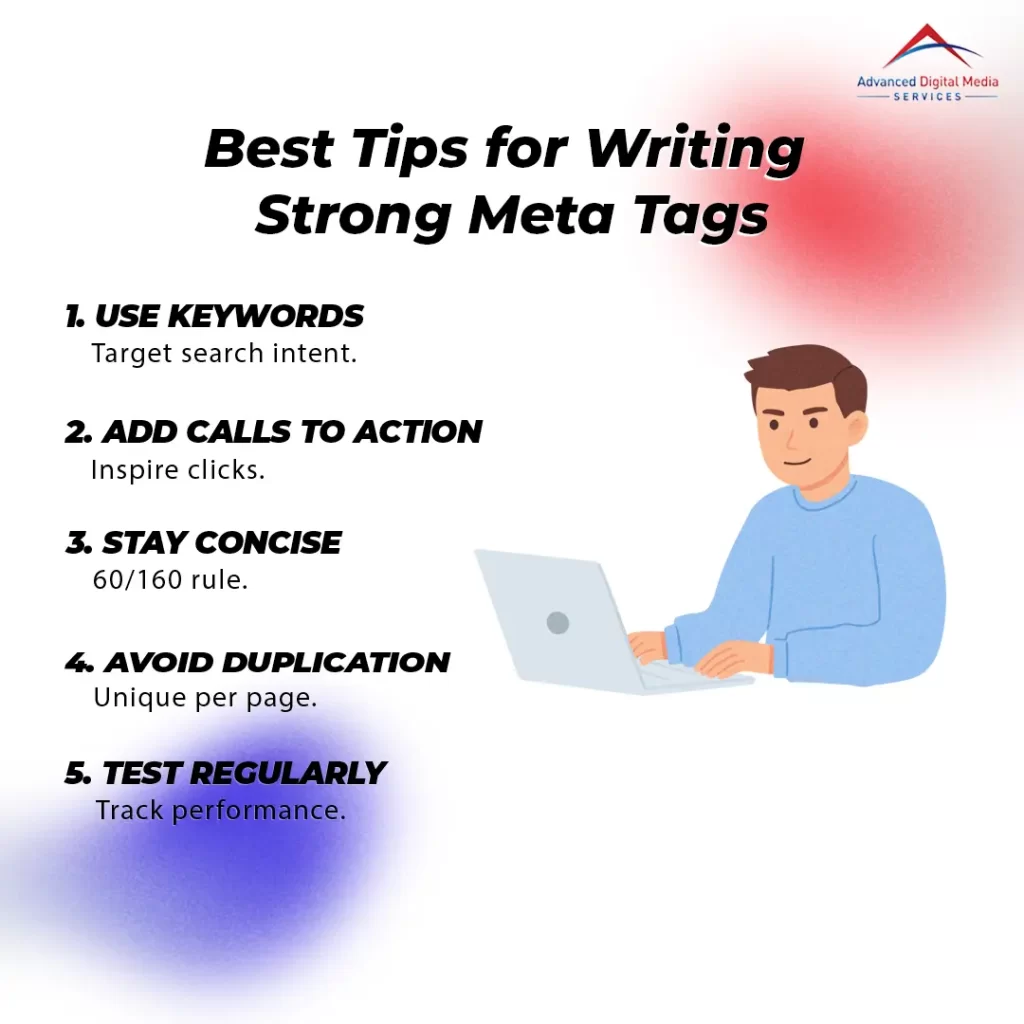
- Create unique and concise meta titles under 60 characters, incorporating primary keywords at the beginning for better context.
- Write persuasive meta descriptions within 150-160 characters, highlighting benefits and including a clear call to action.
- Avoid keyword stuffing; ensure each page has distinct meta tags to prevent confusion for search engines.
- Use compelling language in titles and descriptions to attract clicks and improve click-through rates.
- Regularly monitor and test different versions of meta tags to optimize performance based on user engagement.
What Are Meta Tags and Why Do They Matter for SEO?
Meta tags, like titles and descriptions, play an essential role in how your website ranks in search engines. They not only help search engines understand your content but also influence whether users click on your link. By optimizing these tags, you can boost your visibility and improve your click-through rates on Google.
Understanding the role of meta titles and descriptions in search rankings
While many may overlook them, titles and descriptions play an essential role in your website’s SEO strategy. The importance of meta tags for rankings can’t be overstated; they’re often the first interaction potential visitors have with your content. Meta titles help search engines understand the topic of your page, while meta descriptions provide a summary that entices users to click through. When crafted effectively, these tags not only improve your visibility in search results but also influence how search engines rank your site. By incorporating relevant keywords and making them compelling, you boost your chances of attracting organic traffic. Ultimately, well-optimized meta titles and descriptions can greatly impact your site’s overall performance in search rankings.
How meta tags influence click-through rates on Google
How do meta tags really impact your click-through rates on Google? Well, they play a significant role in determining how often users click on your link in search results. Effective meta tags can enhance your search visibility and entice users to choose your page over others. Here are a few ways they influence click-through rates:
- Compelling Titles: A well-crafted title can grab attention and spark curiosity.
- Informative Descriptions: An engaging description gives users a clear idea of what to expect, increasing their likelihood to click.
- Keyword Usage: Including relevant keywords in your meta tags can improve search visibility, making your page more appealing in search results.
Types of Meta Tags That Impact Your Website’s Performance
When it comes to meta tags, understanding the different types can greatly enhance your website’s performance. Title tags create your first impression in search results, while meta descriptions help you craft compelling summaries that attract clicks. Don’t forget about other important tags like robots, canonical, and Open Graph, which also play vital roles in your site’s visibility.
Title tags — your first impression in search results
Ever wondered why title tags are essential for your website’s success? When it comes to optimizing meta titles for Google, these tags are your first impression in search results. They not only influence your rankings but also entice users to click on your link. A well-crafted title tag can make all the difference in attracting traffic to your site.
Consider these key points when creating your title tags:
- Be concise: Aim for 50-60 characters to guarantee visibility.
- Include keywords: Use relevant search terms to improve SEO.
- Create urgency: Phrases like “Limited Time Offer” can boost clicks.
Meta descriptions — writing compelling summaries that attract clicks
While title tags grab attention, meta descriptions serve as your website’s pitch in search results. They’re your chance to entice users to click through to your site. When writing meta descriptions, aim for clarity and relevance, summarizing your page’s content in a few engaging sentences. Focus on the value you offer and include a call to action to motivate clicks. Crafting click-worthy meta descriptions involves using target keywords naturally, ensuring they resonate with search intent. Keep them around 150-160 characters to avoid truncation in search results. Remember, a compelling meta description can greatly increase your click-through rate, so take the time to refine and test different versions to see what works best for your audience.
Other important tags: robots, canonical, and Open Graph
Although title tags and meta descriptions often steal the spotlight, other important tags like robots, canonical, and Open Graph play a crucial role in your website’s performance. To guarantee you’re following meta tag optimization best practices, consider the following:
- Robots tag: This tells search engines which pages to index and which to avoid.
- Canonical tag: Use this to prevent duplicate content issues by specifying the preferred version of a page.
- Open Graph tag: This enhances your content’s appearance on social media, improving engagement and click-through rates.
Best Practices for Writing Effective Meta Titles
When crafting effective meta titles, you’ll want to use keywords naturally while keeping the length under 60 characters. It’s also smart to add your brand name for better recognition, but be careful not to stuff keywords or create duplicate titles. Following these best practices can really enhance your SEO efforts.
Using keywords naturally while keeping it under 60 characters
To craft effective meta titles, it is essential to incorporate keywords naturally without exceeding the 60-character limit. This helps improve your search engine optimization while ensuring your titles are user-friendly. Here are some tips to take into account when writing meta titles and descriptions:
- Use primary keywords near the beginning: This gives search engines context quickly.
- Keep it concise: Aim for clarity and impact while staying within the character limit.
- Make it compelling: A catchy title can increase click-through rates.
Adding your brand name strategically for recognition
Strategically incorporating your brand name in meta titles can greatly enhance recognition and credibility. When you include your brand name, it helps users associate your content with your business, making it more memorable. Aim to place your brand at the end of the title, especially if your keywords come first. This way, you maintain focus on what users are searching for while still promoting your brand. For effective SEO-friendly metadata creation, keep your titles concise and relevant. Don’t forget to guarantee your brand name appears consistently across all your meta titles to strengthen recognition. By using your brand name thoughtfully, you not only improve visibility but also foster trust with your audience, leading to higher click-through rates.
Avoiding keyword stuffing and duplicate titles
Building on the importance of brand recognition, it’s equally essential to focus on how you structure your meta titles. Avoiding common meta tag mistakes like keyword stuffing and duplicate titles can greatly enhance your SEO efforts. Here are some best practices to keep in mind:
- Be concise: Aim for 50-60 characters to guarantee your titles display fully in search results.
- Use unique titles: Each page should have a distinct title that accurately reflects its content.
- Incorporate relevant keywords: Use keywords naturally without overloading; focus on clarity and readability.
Tips for Crafting Meta Descriptions That Convert
Crafting compelling meta descriptions is essential for grabbing attention and encouraging clicks. You’ll want to write persuasive copy that highlights benefits and includes a clear call to action. Remember to keep your descriptions within 150–160 characters for the best display on search engine results pages.
Writing persuasive copy that encourages users to click
When you want to boost your click-through rates, writing compelling meta descriptions is essential. These brief snippets are your chance to entice users to click on your link rather than your competitors’. Here are some strategies for writing meta tags that drive traffic:
- Use action-oriented language: Start with strong verbs to create urgency.
- Highlight unique selling points: Mention what makes your content stand out.
- Keep it concise: Aim for 150-160 characters to guarantee your message isn’t cut off.
Including a clear call to action or benefit statement
Including a clear call to action or benefit statement in your meta descriptions can greatly enhance their effectiveness. When crafting your meta tags, think about what unique value your content offers. Encourage users to take action by using phrases like “Discover how,” “Get started today,” or “Learn more.” These prompts not only guide users but also play a significant role in improving organic CTR with meta tags. Highlighting a specific benefit, like saving time or gaining insights, can make your description more compelling. Remember, your goal is to entice users to click through to your site, so be direct and persuasive. A well-structured call to action can transform a lackluster meta description into a powerful tool for driving traffic.
Keeping descriptions within 150–160 characters for optimal display
A clear call to action can boost your meta descriptions considerably, but it’s just as important to keep those descriptions concise. Aim for 150–160 characters to guarantee ideal display on search engine results pages. This not only improves your click-through rate but also aligns with modern SEO practices.
Here are some tips for crafting effective meta descriptions:
- Focus on your target audience’s needs and interests.
- Use relevant meta keywords to enhance search visibility.
- Include a compelling reason for users to click through.
Boost Your SEO Results with ADMS Advanced Digital Media Services
If you’re looking to boost your SEO results, ADMS Advanced Digital Media Services has got you covered with expert strategies that extend far beyond just meta tags. Their thorough optimization approach addresses content, structure, and visibility to guarantee your website stands out. Contact ADMS today and start driving more traffic to your site while improving your search rankings.
Expert SEO strategies that go beyond meta tags
While meta tags play an essential role in SEO, they’re just the tip of the iceberg when it comes to boosting your online presence. To really enhance your search rankings and visibility, consider implementing these expert strategies:
- Focus on quality content: Create engaging, valuable content that resonates with your audience and naturally incorporates keywords.
- Optimize site performance: Guarantee your website loads quickly and is mobile-friendly, improving user experience and search engine rankings.
- Leverage backlinks: Build a strong backlink profile through guest blogging and collaborations, which can greatly enhance your authority.
Comprehensive optimization for content, structure, and visibility
To truly boost your SEO results, thorough optimization of your content, structure, and visibility is crucial. Start by crafting unique meta tags for each page. These tags not only help search engines understand your content but also influence click-through rates. Confirm your content is high-quality and relevant, addressing the needs of your target audience. Structure your website intuitively, making it easy for users to navigate and find information. Optimize loading speeds and confirm your site is mobile-friendly to enhance user experience. Don’t forget about visibility; leverage social media and backlinks to broaden your reach. By focusing on these key areas, you’ll create a strong foundation for improved SEO performance and drive more traffic to your website.
Contact ADMS today to improve your rankings and drive more traffic to your website
Ready to elevate your online presence? Contact ADMS today to reveal your website’s full potential. Our expert team specializes in HTML title tag optimization and various SEO strategies designed to boost your rankings and drive more traffic to your site.
Here’s what we can offer you:
- Tailored SEO strategies that align with your business goals
- Detailed audits to identify areas for improvement
- Ongoing support to adapt to the ever-changing digital landscape
With ADMS, you’ll not only see increased visibility but also enhanced user experience and engagement. Let us help you craft a digital marketing plan that truly resonates with your audience, resulting in measurable growth. Don’t wait—reach out to us now!
Frequently Asked Questions
How Often Should I Update My Meta Tags?
You should update your meta tags regularly, ideally every few months or whenever you launch new content or products. Keeping them fresh helps improve your SEO and guarantees they accurately reflect your current offerings.
Can Meta Tags Improve My Website’s Loading Speed?
No, meta tags won’t directly improve your website’s loading speed. However, optimizing them can enhance your site’s visibility, which might bring more traffic, indirectly affecting overall performance and user engagement positively.
Do Social Media Platforms Use Meta Tags?
Yes, social media platforms do use meta tags. They help define how your content appears when shared, influencing visibility and engagement. It’s essential to optimize these tags for better reach and interaction on social media.
What Tools Can Help Me Analyze My Meta Tags?
Imagine sailing smoothly through the digital ocean; tools like Screaming Frog, Moz, and SEMrush can help you analyze your meta tags. They’ll illuminate areas for improvement, guiding your ship towards better visibility and performance.
How Do Meta Tags Affect Mobile SEO?
Meta tags greatly impact mobile SEO by improving how search engines interpret your content. They help guarantee your site displays correctly on mobile devices, enhancing user experience, which can lead to higher rankings and conversions.
Conclusion
In conclusion, mastering meta tags is essential for boosting your website’s SEO performance. Did you know that 70% of marketers believe that effective meta descriptions can greatly improve click-through rates? By implementing the strategies outlined in this article, you can create compelling meta titles and descriptions that not only attract search engines but also entice users to click. So, get started today and watch your online visibility soar!