To optimize title tags for better rankings, include your primary keywords near the beginning and keep them concise, ideally under 60 characters. Avoid keyword stuffing and guarantee each page has a unique title to reflect its content. This helps search engines and users understand what to expect. Don’t forget to make your titles engaging, as they influence click-through rates. If you’re curious about more strategies to enhance your SEO, there’s plenty more to explore.
Key Takeaways
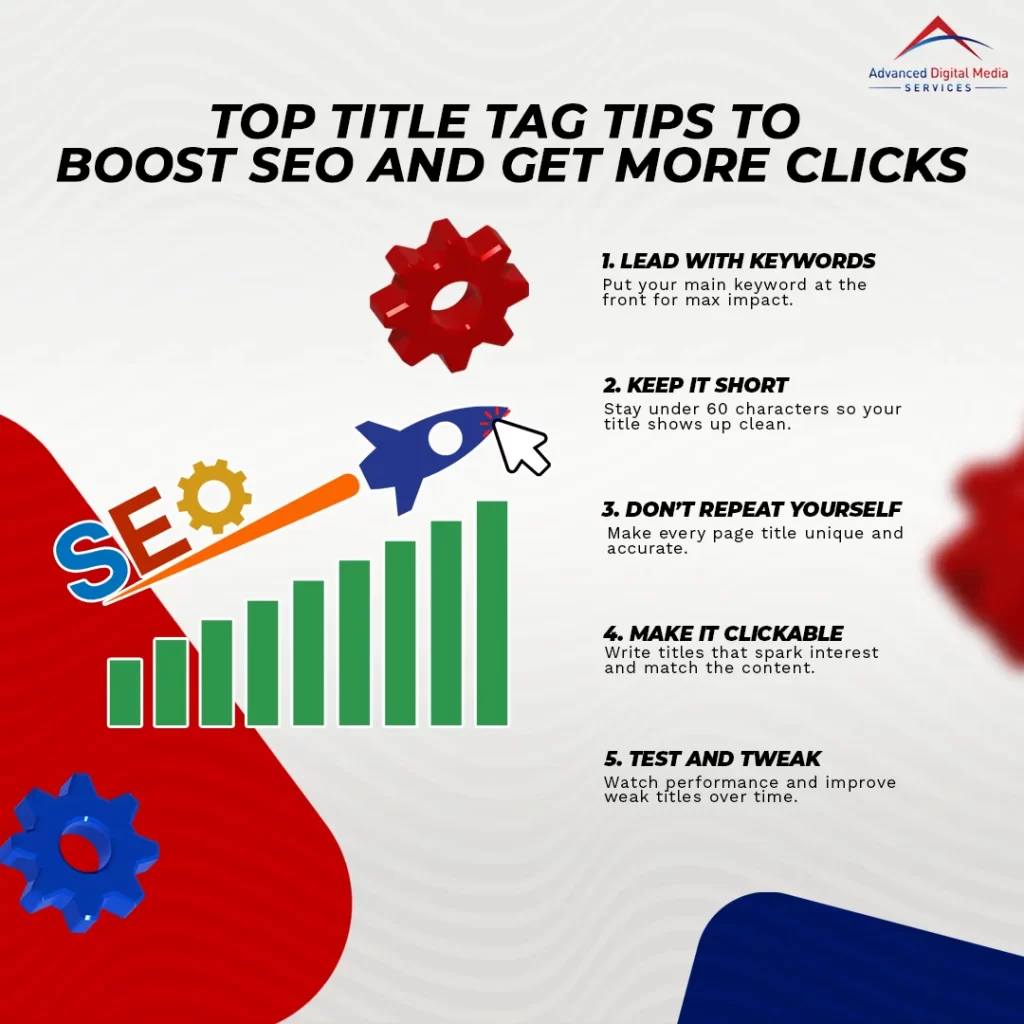
- Include primary keywords at the beginning of title tags for maximum impact and visibility in search results.
- Keep title tags under 60 characters to prevent truncation and ensure full display in search engine results.
- Create unique title tags for each page to avoid duplication and accurately represent the content.
- Avoid keyword stuffing; focus on one or two relevant keywords for natural language and a better user experience.
- Regularly monitor and analyze performance metrics to refine and improve underperforming title tags effectively.
What Are Title Tags and Do They Matter for SEO?
Title tags are vital elements of your webpage that help search engines understand your content. They directly influence your site’s visibility and can greatly impact click-through rates, making them essential for user experience. By optimizing your title tags, you can attract more visitors and improve your overall SEO performance.
Role of Title Tags in Search Engine Visibility
Around 70% of users never scroll past the first page of search results, making it essential to grab their attention right from the start. Title tags play a critical role in achieving this goal. They serve as the first impression of your content in search results, influencing whether users click through to your site. Keeping within the title tag character limit—typically around 60 characters—ensures your title is fully visible and impactful. A well-crafted title tag not only includes relevant keywords but also resonates with what your audience is searching for. By optimizing your title tags, you enhance your search engine visibility, helping you stand out among competitors and attract more clicks to your website.
Impact on Click-Through Rates and User Experience
How do title tags influence your website’s click-through rates and user experience? A well-optimized title tag can greatly enhance your site’s appeal in search results, encouraging users to click. By following SEO title tag best practices, you’ll create titles that not only rank well but also resonate with your audience.
Consider these key factors for optimizing title tags:
- Relevance: Verify your title reflects the content accurately.
- Length: Keep it under 60 characters to avoid truncation in search results.
- Keywords: Include primary keywords early for better visibility.
- Clarity: Use clear language that communicates value to the user.
When you optimize your title tags, you improve both your click-through rates and user experience simultaneously.
Best Practices for Writing Effective Title Tags
When crafting effective title tags, you should focus on including your primary keywords strategically to enhance visibility. It’s also essential to stay within the ideal character length, as this guarantees your titles display properly in search results. Let’s explore these best practices to help boost your SEO efforts.
Including Primary Keywords Strategically
To boost your website’s visibility, strategically including primary keywords in your title tags is essential. When you’re writing effective title tags, keep these best practices in mind:
- Place primary keywords early in the title to grab attention.
- Limit keyword stuffing; use natural language for readability.
- Consider user intent; think about what your audience is searching for.
- Mix in branding; add your brand name at the end for recognition.
Staying Within Optimal Character Length
Staying within the ideal character length for title tags is essential for effective SEO. Search engines typically display the first 50-60 characters of your title tag, so aim for this range to guarantee your title is fully visible. If you exceed this limit, your title may get cut off, diminishing its impact. For meta title optimization, focus on crafting concise, descriptive titles that include your primary keywords. This not only helps search engines understand your content but also entices users to click. Remember, clarity and relevance matter; a well-optimized title can greatly improve your click-through rates. Keep it under 60 characters for the best results, and don’t forget to make it compelling!
Common Title Tag Mistakes to Avoid
When optimizing your title tags, it’s essential to steer clear of common pitfalls that can hurt your rankings. Keyword stuffing and duplicate titles can confuse search engines and users alike, while ignoring your brand’s relevance can diminish your site’s appeal. Let’s explore these mistakes so you can create more effective title tags.
Keyword Stuffing and Duplicate Titles
Although it might seem tempting to cram as many keywords as possible into your title tags, doing so can actually hurt your search engine rankings. Keyword stuffing leads to a poor user experience and can trigger penalties from search engines. Instead, focus on strategic keyword placement in titles for maximum impact.
Here are some common mistakes to avoid:
- Overusing keywords: Stick to one or two relevant keywords.
- Duplicate titles: Each page should have a unique title tag.
- Ignoring user intent: Make sure your title reflects the content accurately.
- Neglecting length: Keep your title tags under 60 characters for ideal display.
Ignoring Branding and Relevance
Many businesses overlook the importance of branding and relevance in their title tags, which can undermine their overall SEO efforts. When crafting title tags, it’s essential to reflect your brand identity and the specific content of your page. Ignoring this can lead to a disconnect between what users expect and what they find. Remember, title tags vs meta descriptions serve different purposes; while title tags grab attention, meta descriptions provide further context. Failing to incorporate your brand name or relevant keywords in title tags can dilute your visibility in search results. Make sure your title tags resonate with both your audience and your brand, ensuring you’re not just attracting clicks but also the right kind of traffic that converts.
How ADMS Can Help
When it comes to optimizing your title tags, Advanced Digital Media Services has your back. They create customized SEO strategies that focus on tag optimization tailored to your business needs. Plus, with continuous monitoring and adjustments, you’ll see ongoing improvements that can elevate your search rankings.
Customized SEO Strategies and Tag Optimization
To guarantee your business stands out in the crowded digital landscape, customized SEO strategies and effective tag optimization are essential. By focusing on vital on-page SEO elements, you can enhance your search visibility and attract more visitors. Here’s how you can optimize your title tags:
- Use relevant keywords that reflect your content.
- Keep it under 60 characters for better display in search results.
- Make it engaging to encourage clicks.
- Include your brand name for recognition.
At Advanced Digital Media Services, we tailor our approach to your specific needs. Our experts analyze your current strategies, ensuring your title tags and other on-page SEO elements are optimized for maximum impact. Let’s work together to elevate your online presence!
Monitoring and Adjusting for Continuous Improvement
As you endeavor for continuous improvement in your digital marketing efforts, monitoring your SEO performance becomes essential. By analyzing how your title tags are performing, you can identify what works and what needs tweaking. Regularly check your SEO title tag formatting to guarantee it aligns with current best practices and trends. This will help you stay competitive and relevant in search results.
Utilizing tools to track keyword rankings and click-through rates can provide invaluable insights. If you notice certain tags underperforming, don’t hesitate to adjust them. This proactive approach allows you to refine your strategy continually. Partnering with Advanced Digital Media Services can further enhance your efforts, offering expert support in monitoring and optimizing your SEO title tags for ongoing success.
Frequently Asked Questions
How Do Title Tags Affect Click-Through Rates?
Title tags play an essential role in click-through rates. They’re your first impression in search results, so if they’re compelling and relevant, you’ll attract more clicks and drive traffic to your site effectively.
Can Title Tags Be Duplicated Across Multiple Pages?
You wouldn’t want to create a déjà vu experience for your visitors. Duplicating title tags across multiple pages can confuse search engines and users alike, so it’s best to keep each one unique and meaningful.
What Is the Ideal Length for a Title Tag?
The ideal length for a title tag is typically between 50 and 60 characters. Keeping it concise guarantees it’s fully displayed in search results, helping you attract more clicks and improve your site’s visibility.
Should I Include Brand Names in Title Tags?
You might think brand names don’t matter, but including them in title tags can enhance recognition and trust. When users see familiar brands, they’re more likely to click, improving your click-through rates considerably.
How Often Should I Update My Title Tags?
You should update your title tags regularly, ideally every few months or when significant changes occur on your website. This keeps your content relevant, improves search visibility, and helps you stay competitive in your industry.
Conclusion
In summary, optimizing your title tags isn’t just a theory—it’s a proven strategy for improving your SEO and attracting more visitors. By following best practices and avoiding common mistakes, you can greatly enhance your website’s visibility. Remember, your title tag is often the first thing potential visitors see, so make it count! With the right approach, you can access the full potential of your content and watch your rankings climb. Don’t underestimate the power of a well-crafted title tag!