To write content that ranks highly on Google, you need to focus on helping your readers first and optimizing for search engines second. Start by finding the keywords people are actually searching for, then write clear, useful content that answers their questions. Use headings, links, and short paragraphs to make it easy to read, and always keep your info up-to-date. When your content is helpful, organized, and well-written, Google rewards it with higher rankings.
Key Takeaways
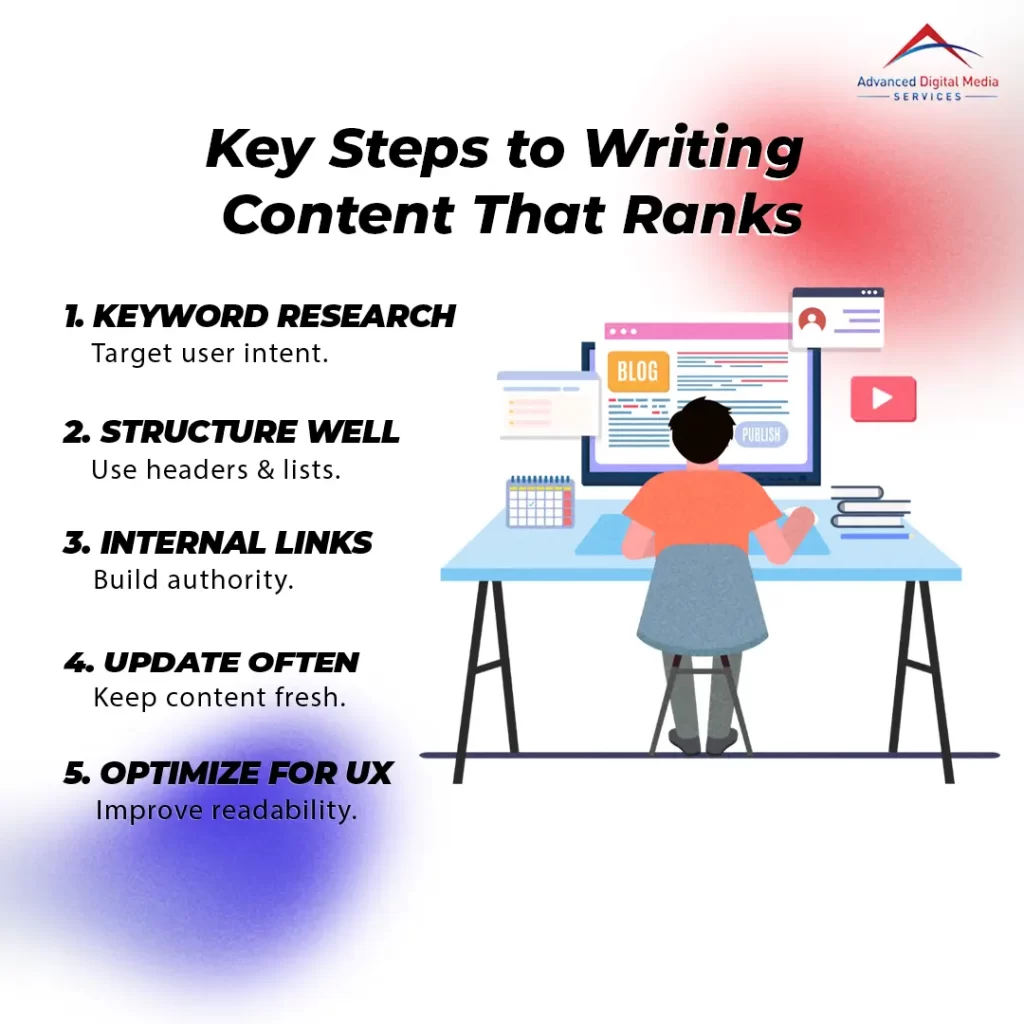
- Conduct thorough keyword research to identify high-value search terms that align with user intent.
- Structure content with headers, bullet points, and lists for improved readability and organization.
- Incorporate internal and external links to enhance authority and user engagement.
- Regularly update content to maintain relevance and incorporate current trends and data.
- Use compelling visuals and concise language to improve user experience and comprehension.
Why High-Ranking Content Matters for Your Business
High-ranking content is essential for your business because it directly impacts your online visibility. When your content ranks well on Google, you attract more traffic, which can lead to increased leads and conversions. By focusing on quality, you not only improve your search rankings but also enhance your brand’s credibility.
The connection between quality content and online visibility
When you create quality content, you’re not just filling a webpage; you’re building a bridge to your audience. This connection increases your online visibility, making it easier for potential customers to find you. Adhering to SEO content writing best practices guarantees that your content is not only engaging but also optimized for search engines. High-quality content addresses user intent, answering questions and providing value that keeps readers coming back. As your content ranks higher on search engines, visibility rises, leading to more organic traffic. Additionally, well-crafted content enhances your brand’s credibility, fostering trust with your audience. In the digital landscape, the connection between quality content and visibility is essential for standing out and achieving long-term success.
How ranking on Google drives traffic, leads, and conversions
Achieving a strong position on Google isn’t just about visibility; it directly impacts your business’s bottom line. When your content ranks high, it drives organic traffic to your site, leading to more potential customers. This influx of visitors often translates to increased leads and higher conversion rates. By optimizing content for search intent, you guarantee that your audience finds exactly what they’re looking for, which boosts engagement and trust. The more relevant your content is, the more likely visitors are to take action, whether that’s signing up for a newsletter or making a purchase. In the digital landscape, high-ranking content isn’t just a goal; it’s a necessity for sustained growth and success.
Understand What Google Looks for in Top-Performing Content
To create content that ranks well on Google, you need to grasp what the search engine values most. Google prioritizes factors like expertise, authoritativeness, and trustworthiness, alongside relevance and user experience. Understanding these elements will help you craft content that not only attracts clicks but also keeps your audience engaged.
Expertise, Authoritativeness, and Trustworthiness (E-A-T) explained
In the domain of digital content, understanding the principles of Expertise, Authoritativeness, and Trustworthiness—commonly referred to as E-A-T—is essential for ranking high on Google. When you create content, you need to showcase your expertise in the subject matter. This means providing valuable insights and information based on your experience. Authority plays a significant role, too; you should establish credibility through citations, references, and backlinks from reputable sources. Finally, trust is critical—ensuring your content is accurate, transparent, and free from misleading information fosters a trustworthy relationship with your audience. By focusing on these E-A-T elements, you’ll enhance your content’s ability to rank well and connect with readers, ultimately boosting your online visibility.
Relevance, search intent, and user experience as ranking priorities
While crafting content that captivates your audience, it’s essential to understand how relevance, search intent, and user experience impact your Google rankings. Start with thorough keyword research for ranking content; this helps you identify what users are searching for and guarantees your content meets their needs. Align your content with the search intent behind those keywords—whether users are looking for information, making a purchase, or seeking a solution. Additionally, prioritize user experience by making sure your site is easy to navigate, mobile-friendly, and fast-loading. By aligning content relevance with a deep grasp of search intent and delivering a positive user experience, you significantly improve your likelihood of ranking higher on Google and engaging your audience more effectively.
Key Strategies for Writing Content That Ranks
To create content that ranks well, you need to focus on a few key strategies. Start by conducting thorough keyword research to identify valuable search terms, then use headers and meta tags effectively for better organization. Remember, it’s important to write for your audience first and optimize for search engines second.
Conducting keyword research to find high-value search terms
Effective keyword research is essential for discovering high-value search terms that can propel your content to the top of search engine results. Start by using tools like Google Keyword Planner or Ahrefs to identify keywords relevant to your niche. Look for terms with a good balance of search volume and competition, focusing on long-tail keywords that reflect user intent. When conducting keyword research to find high-value search terms, consider your audience’s questions and needs. This insight can guide your content strategy. Finally, integrate these keywords naturally into your writing, ensuring it flows well while maintaining clarity. Remember, effective SEO copywriting for high rankings isn’t just about stuffing keywords; it’s about creating valuable content that resonates with your audience.
Using headers, meta tags, and structured formatting effectively
Headers, meta tags, and structured formatting play an essential role in optimizing your content for search engines and enhancing user experience. By using headings and subheadings effectively, you create a clear hierarchy that guides readers through your content. This not only makes it easier for users to skim but also helps search engines understand the context of your information. Don’t forget to craft compelling meta titles and descriptions; these elements are vital for enticing clicks from search results. Additionally, using bullet points and numbered lists can break up text and improve readability. Overall, a well-structured format keeps your audience engaged while signaling to search engines that your content is organized and relevant, boosting your chances of ranking higher.
Writing for humans first, then optimizing for search engines
One of the most important strategies for writing content that ranks high on Google is to prioritize human readers before search engine optimization. When you focus on creating engaging and valuable blog posts, your audience will appreciate the content more, leading to better engagement and shares. Here are some key points to reflect on:
- Use a conversational tone that resonates with your audience.
- Provide useful information that answers their questions or solves their problems.
- Encourage interaction through questions or calls to action.
Improving SEO Performance with Optimization and Consistency
To boost your SEO performance, you need to focus on both optimization and consistency. This means adding internal and external links to enhance your content’s authority, updating older posts to keep them relevant, and using visuals and alt text for better engagement. By implementing these strategies, you’ll improve your chances of ranking higher on Google.
Adding internal and external links for authority and depth
While crafting high-quality content is essential, adding internal and external links can greatly enhance its authority and depth. By implementing effective internal linking for SEO, you’re not only guiding your readers but also improving your site’s structure. Here are a few key benefits:
- Authority Boost: Linking to authoritative external sources can strengthen your credibility.
- User Engagement: Internal links encourage visitors to explore more of your content, decreasing bounce rates.
- SEO Enhancement: Search engines appreciate well-structured links, helping your pages rank better.
Incorporating these links enriches the reader’s experience and signals to search engines that your content is thorough and well-researched. Don’t underestimate the power of links in your content strategy!
Updating old content to maintain rankings and relevance
Updating old content is essential if you want to maintain your site’s rankings and relevance in the ever-evolving digital landscape. Search engines prioritize fresh, relevant content, so regularly revisiting and refining your existing posts is key. By updating old content to maintain rankings and relevance, you guarantee that your information stays accurate and aligned with current trends or changes in your industry.
Focus on content optimization for organic traffic by enhancing keywords, improving meta descriptions, and updating internal links. Don’t forget to check for outdated statistics or references, as this can greatly impact reader trust. Regular updates not only boost your SEO performance but also provide your audience with valuable, up-to-date insights that keep them coming back for more.
Leveraging visuals, alt text, and readability for better engagement
Revitalizing your content goes hand in hand with enhancing user engagement through visuals, alt text, and readability. By incorporating visuals for engagement, you not only capture attention but also improve comprehension. Make sure your content is visually appealing and easy to digest. Here are a few tips to enhance your content:
- Use high-quality images and infographics to break up text.
- Add descriptive alt text for images to improve SEO and accessibility.
- Keep sentences and paragraphs short for better readability.
These strategies will keep your audience engaged and encourage them to spend more time on your site, ultimately boosting your SEO performance. Remember, a well-structured, visually rich piece of content is more likely to rank high on Google.
Boost Your Rankings with ADMS Advanced Digital Media Services
If you want to boost your rankings, Advanced Digital Media Services has got you covered. Their professional SEO content creation is designed not just to rank but to convert, using data-driven keyword strategies and performance tracking. Contact ADMS today to elevate your website content and dominate Google search results.
Professional SEO content creation designed to rank and convert
When you want to elevate your online presence, professional SEO content creation is essential for both ranking and converting visitors into customers. By focusing on on-page SEO for content marketing, you can effectively improve your website’s visibility and engagement. Here’s what you should consider:
- Crafting keyword-rich titles and headers to attract search engines.
- Incorporating compelling call-to-actions that guide visitors toward conversion.
- Ensuring your content is optimized for user experience and readability.
Partnering with experts like ADMD can help you tailor your content strategy to fit your unique business goals. With the right approach, your content won’t just rank higher; it’ll also drive meaningful interactions that turn visitors into loyal customers.
Data-driven keyword strategies and performance tracking
To truly maximize your content’s potential, employing data-driven keyword strategies is vital. By analyzing search trends and user behavior, you can identify the right keywords that resonate with your target audience. Start by using tools like Google Analytics and keyword planners to gather insights on high-performing terms in your niche. Once you have your keywords, it’s important to integrate them naturally into your content for better visibility. Don’t forget to track performance regularly; monitoring metrics like click-through rates and engagement will help you refine your approach. Adjusting your strategies based on data will guarantee that your content remains relevant and continues to rank high on Google. Remember, staying informed is vital in the ever-evolving digital landscape.
Contact ADMS today to elevate your website content and dominate Google search results
Elevating your website content and dominating Google search results is just a step away with Advanced Digital Media Services (ADMS). By partnering with ADMS, you’ll benefit from expert strategies focused on creating long-form content for Google that resonates with your audience and boosts your rankings.
Here’s how ADMS can help you:
- Customized SEO Strategies: Tailored plans that meet your unique business needs.
- Engaging Content Creation: High-quality, long-form content designed to captivate and convert.
- Ongoing Performance Tracking: Regular analytics to guarantee your content remains effective.
Don’t wait any longer. Contact ADMS today and watch your website transform into a powerful tool that drives traffic, increases visibility, and elevates your brand in search results.
Frequently Asked Questions
How Often Should I Update My Existing Content?
You should update your existing content regularly—aim for at least every six months. This keeps it fresh, relevant, and aligned with current trends, which can help maintain and improve your audience’s engagement and search rankings.
What Is the Ideal Length for High-Ranking Articles?
There’s no magic number, but aiming for 1,500 to 2,500 words often works well. Longer articles can dive deeper, providing value and engaging readers, which can improve rankings and keep visitors on your page longer.
How Can I Use Images Effectively in My Content?
You can use images effectively by ensuring they’re relevant, optimizing file sizes for faster loading, adding alt text for accessibility, and strategically placing them to break up text, enhancing engagement and visual appeal in your content.
Should I Focus on Local SEO for Better Rankings?
Absolutely, you should focus on local SEO for better rankings. It’s your secret weapon to reach nearby customers who need your services. Don’t overlook optimizing for local searches; it could transform your business’s visibility dramatically.
What Tools Can Help Me Analyze My Content’s SEO Performance?
You can use tools like Google Analytics, SEMrush, and Ahrefs to analyze your content’s SEO performance. They’ll help you track metrics, identify keywords, and optimize your strategy for better visibility and engagement.
Conclusion
In today’s digital jungle, writing content that ranks high on Google isn’t just a nice-to-have—it’s a must. By understanding what search engines crave and consistently optimizing your content, you’ll not only capture your audience’s attention but also climb those rankings like a pro. Remember, it’s all about balancing creativity with strategy. So, gear up and start crafting your high-ranking website; after all, the internet waits for no one!