
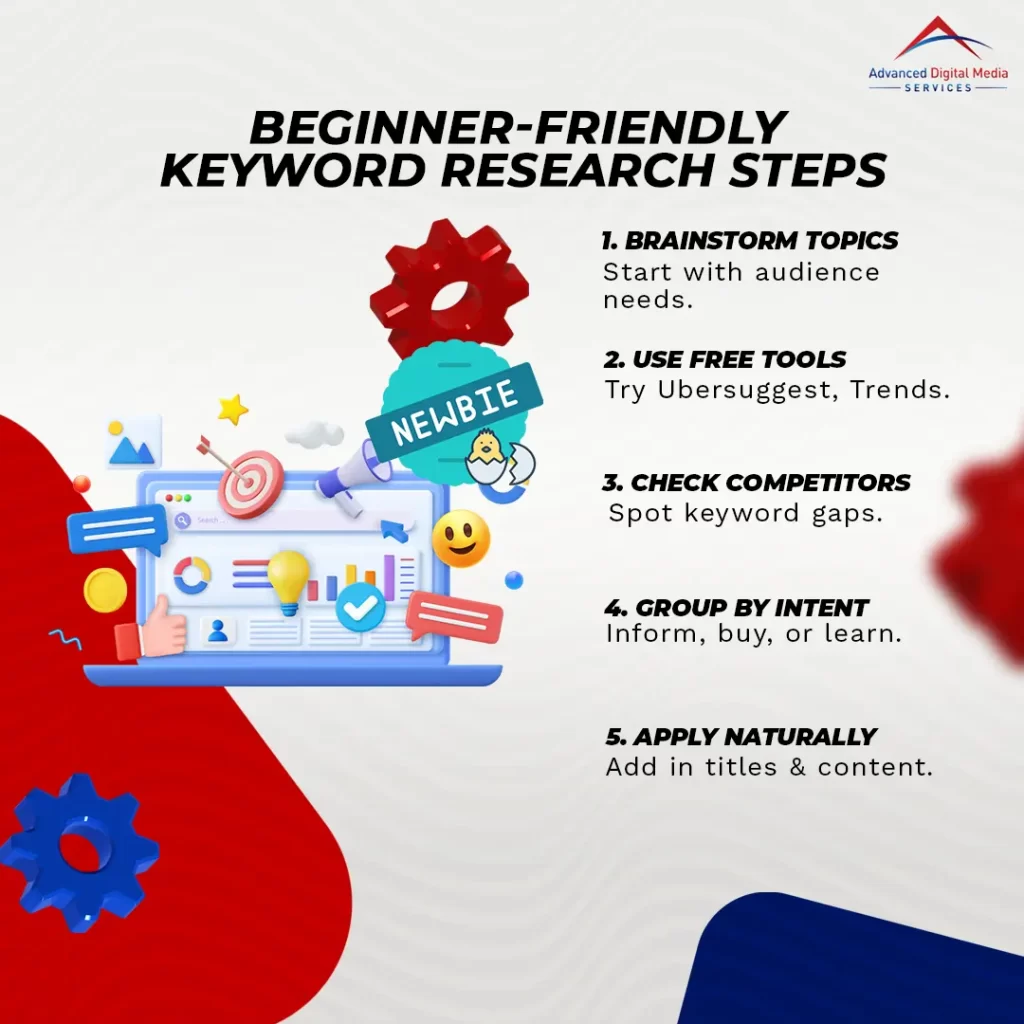
Keyword research is essential for your SEO success. Start by brainstorming topics your audience cares about. Use free tools like Ubersuggest or Google Trends to gather keyword ideas. Analyze competitors to uncover gaps you can fill. Organize your keywords by relevance and search intent for better results. Finally, don’t forget to apply these keywords naturally in your content, titles, and meta descriptions. You’ll discover even more effective strategies to enhance your visibility as you explore further.
Key Takeaways
- Start by brainstorming topics based on your audience’s needs and common questions they may have.
- Utilize free tools like Ubersuggest and Google Trends to gather essential keyword data and insights.
- Analyze competitor websites to identify keyword opportunities and gaps you can exploit.
- Group your keywords by topic or service to create focused content themes that align with search intent.
- Continuously monitor your SEO performance and adjust your keyword strategies based on analytics and trends.
Why Keyword Research Is the Foundation of SEO Success
Keyword research is essential because it connects your business to what potential customers are searching for online. Understanding the difference between short-tail and long-tail keywords can help you tailor your content effectively. This foundation sets the stage for improving your SEO success and reaching the right audience.
How keywords connect your business to customer searches
Understanding how your audience searches for information is essential for connecting your business to potential customers. By using effective keywords, you can align your content with what people are actively looking for. This connection increases your visibility in search results, driving more traffic to your website. To get started, consider these SEO keyword research tips: identify relevant terms that reflect your offerings, analyze competitors to find gaps, and use tools to gauge search volume and competition. This research helps you create targeted content that speaks directly to your audience’s needs. Ultimately, the right keywords bridge the gap between your business and customer searches, leading to higher engagement and conversion rates.
The difference between short-tail and long-tail keywords
While you might be tempted to think all keywords are created equal, there’s an essential distinction between short-tail and long-tail keywords that can greatly impact your SEO strategy. Short-tail keywords, like “shoes,” are broad and generate high search volume but can be highly competitive. In contrast, long-tail keywords are more specific phrases, such as “best running shoes for flat feet.” These long-tail keyword examples usually have lower search volume but tend to attract more targeted traffic, leading to higher conversion rates. By incorporating both types into your strategy, you can balance visibility and specificity, ultimately driving qualified traffic to your site. Understanding this difference is key to optimizing your SEO efforts effectively.
Essential Tools for Beginner Keyword Research
When you’re just starting with keyword research, choosing the right tools can make all the difference. You’ll want to weigh the pros and cons of free versus paid options, considering what fits your needs best. Plus, knowing how to use tools like Google Keyword Planner, SEMrush, or Ahrefs can really boost your strategy.
Free vs. paid tools—what’s best for getting started
How do you choose the right tools for keyword research when starting your digital marketing journey? You’ll want to weigh the benefits of free keyword research tools against paid options. Free tools, like Ubersuggest or Google Trends, offer a great starting point. They help you understand search volume and trends without any financial commitment. However, paid tools like SEMrush or Ahrefs provide deeper insights, competitive analysis, and advanced features that can be invaluable as your needs grow. For beginners, starting with free tools can help you build confidence and gather essential data. As you progress and invest more into your strategy, consider switching to paid tools for enhanced capabilities that can elevate your keyword research.
How to use Google Keyword Planner, SEMrush, or Ahrefs
To kick off your keyword research journey, utilizing tools like Google Keyword Planner, SEMrush, or Ahrefs can make a significant difference in your strategy. These platforms help you discover how to find target keywords effectively. Start with Google Keyword Planner; it’s user-friendly and shows keyword ideas along with search volume data. SEMrush offers a competitive analysis feature, allowing you to see what keywords your competitors rank for. Ahrefs excels in showing keyword difficulty and clicks, giving you insights into which keywords are worth pursuing. By leveraging these tools, you can refine your keyword list, ensuring you target the most relevant terms for your audience, ultimately enhancing your SEO efforts and driving traffic to your site.
Simple Strategies to Find the Right Keywords
You don’t need to overcomplicate keyword selection. Begin by generating topics relevant to your audience’s requirements, examine competitor websites for untapped potential, and determine the underlying purpose behind particular keywords. Implementing these straightforward approaches can facilitate the discovery of crucial information and optimize your keyword research process.
Brainstorming topics based on your audience’s needs
While crafting an effective keyword strategy may seem challenging, understanding your audience’s needs is key to uncovering the right terms that drive traffic. Start by brainstorming topics based on your audience’s needs. Think about the problems they face and the questions they ask. Create a list of potential topics that resonate with their interests and pain points.
Next, consider keyword intent explained—understand whether your audience is looking for information, solutions, or products. This insight helps you align your topics with the specific search intents of your potential visitors. By focusing on what your audience truly needs, you’ll be well-equipped to find relevant keywords that not only attract traffic but also engage and convert visitors effectively.
Analyzing competitor websites for opportunities
Understanding your audience’s needs provides a solid foundation for your keyword strategy, but it doesn’t stop there. Analyzing competitor websites for opportunities is a powerful way to enhance your competitive keyword analysis. Start by identifying your main competitors and using tools like SEMrush or Ahrefs to explore their keywords. Look for gaps in their strategy—keywords they’re ranking for that you aren’t, or phrases with lower competition. Pay attention to content topics, meta tags, and backlink profiles. This information can reveal potential keywords that might work for you. Finally, prioritize keywords based on relevance and search volume, ensuring they align with your audience’s needs to maximize your chances of ranking higher.
Identifying search intent behind keywords
How can you effectively identify the search intent behind keywords? Start by analyzing the search volume and competition for each keyword. High search volume often indicates strong interest, but be wary of high competition; this could mean the keyword is saturated. Next, look at the context of the keywords. Are they informational, transactional, or navigational? Use tools like Google’s “People also ask” and search suggestions to gauge what users are really looking for. You can also examine the top-ranking pages—are they providing in-depth articles, product pages, or quick answers? Understanding these nuances helps you align your content with what the audience seeks, ultimately enhancing your SEO strategy and improving engagement.
How to Organize and Apply Your Keywords
Organizing your keywords is essential for effective SEO. You should group them by topic or service and use them naturally in your titles, content, and meta descriptions. This approach not only improves your search rankings but also enhances the overall user experience.
Grouping keywords by topic or service
When you group keywords by topic or service, it not only streamlines your SEO efforts but also enhances your content’s relevance. This approach helps you create targeted content that resonates with your audience. Here are three steps to effectively group your keywords:
- Identify Core Topics: Start by determining the main topics or services your business offers.
- Cluster Keywords: Find niche keywords related to each topic. Group similar keywords together to create focused content themes.
- Create Content Pillars: Develop content around these clusters, ensuring each piece addresses specific queries your audience may have.
Using keywords naturally in titles, content, and meta descriptions
To effectively enhance your SEO efforts, using keywords naturally in titles, content, and meta descriptions is essential. Start by incorporating your primary keyword in the title, making it catchy yet relevant. In your content, weave keywords naturally into sentences, ensuring they fit the context without sounding forced. This on-page SEO keyword usage helps improve readability and keeps your audience engaged. For meta descriptions, succinctly summarize your content while including your keywords. This not only boosts your chances of ranking higher but also encourages users to click through. Remember, the goal is to create a seamless experience for your readers while optimizing for search engines. A balanced approach will lead to better visibility and increased traffic.
Boost Your SEO Results with Advanced Digital Media Services
If you’re looking to enhance your SEO results, Advanced Digital Media Services has got you covered. Their expert keyword research is tailored specifically to your industry and goals, ensuring you get the most effective strategies in place. Don’t wait—contact ADMS today and start building a data-driven SEO plan that boosts your online presence.
Expert keyword research tailored to your industry and goals
Releasing the potential of your online presence starts with expert keyword research tailored specifically to your industry and goals. This process isn’t just for seasoned marketers; even beginners can benefit from a structured approach. Here’s a quick guide to help you focus your efforts:
- Identify Your Audience: Understand who your customers are and what they’re searching for.
- Analyze Competitors: Look at keywords your competitors are using and find gaps you can exploit.
- Use SEO Tools: Leverage tools to discover high-traffic keywords relevant to your niche.
Proven SEO strategies to improve rankings and traffic
When you want to elevate your website’s performance, implementing proven SEO strategies can make all the difference. Start by choosing profitable keywords that align with your audience’s search intent. Use tools like Google Keyword Planner to identify these keywords and analyze their competition. Next, optimize your website’s on-page elements—title tags, meta descriptions, and header tags—incorporating your chosen keywords naturally. Don’t forget about creating high-quality content that addresses your visitors’ needs, as well as building backlinks from reputable sites to improve your authority. Finally, monitor your rankings and traffic regularly to refine your strategies. By focusing on these proven techniques, you’ll see an increase in visibility and drive more traffic to your site over time.
Contact ADMS today to start building a data-driven SEO plan
Boosting your SEO results requires a strategic approach, and that’s where Advanced Digital Media Services comes in. To effectively harness keyword trends for beginners, you need a tailored plan. Here’s how ADMS can help:
- Keyword Research: Identify the most relevant keywords for your niche using data-driven insights.
- Content Creation: Develop high-quality content that aligns with current keyword trends, enhancing engagement.
- Performance Tracking: Monitor your SEO progress and adjust strategies based on analytics.
Frequently Asked Questions
What Is the Difference Between Short-Tail and Long-Tail Keywords?
Short-tail keywords are broad terms with high search volume, while long-tail keywords are more specific phrases with lower search volume. You’ll often find that long-tail keywords attract more targeted traffic to your site.
How Often Should I Update My Keyword List?
You should update your keyword list regularly, ideally every few months or after significant changes in your business or industry. This guarantees you’re targeting the most relevant keywords for your audience and improving your SEO strategy.
Can I Use Keywords From Competitors?
Sure, you can use competitors’ keywords—just like borrowing a neighbor’s lawnmower! But make it yours; add unique twists and insights. Otherwise, you’re just a copycat in a digital marketing costume party.
What Are LSI Keywords and How Do I Use Them?
LSI keywords are related terms that help search engines understand content context. You can use them by incorporating them naturally within your text, enhancing relevance without keyword stuffing, ultimately improving your SEO and user experience.
How Do Seasonal Trends Affect Keyword Relevance?
Seasonal trends can substantially affect keyword relevance. You’ll want to adjust your focus based on seasonal interest, optimizing for timely keywords that align with user searches to enhance your content’s visibility and engagement throughout the year.
Conclusion
Now that you’ve uncovered the fundamentals of keyword research, you’re just one step away from transforming your online presence. Imagine the surge of traffic as you implement these strategies, but what if there’s even more to discover? What hidden gems lie within those keywords waiting to be unearthed? As you embark on your SEO journey, remain inquisitive and continue to test and explore—your adventure has only just started. Don’t let the opportunities available to you slip away.