A headline has one job before anything else: earn the next click. That is where emotional triggers in headlines become useful. They help your title feel relevant, urgent, helpful, or worth opening without turning it into clickbait. For businesses working on SEO, paid ads, social posts, blogs, and landing pages, the right headline can make the difference between being noticed and being ignored. At Advanced Digital Media Services, we look at headlines as part of the bigger digital strategy. A headline should match the page, the audience, the platform, and the action you want readers to take. When it does, you get more than attention. You get better-qualified traffic.
Why Emotional Triggers in Headlines Work
Emotional headlines work because people make fast decisions online. Before someone reads your blog, opens your advertisement, or clicks your service page, they scan the headline and ask, “Is this for me?”
Emotion Helps Readers Decide Faster
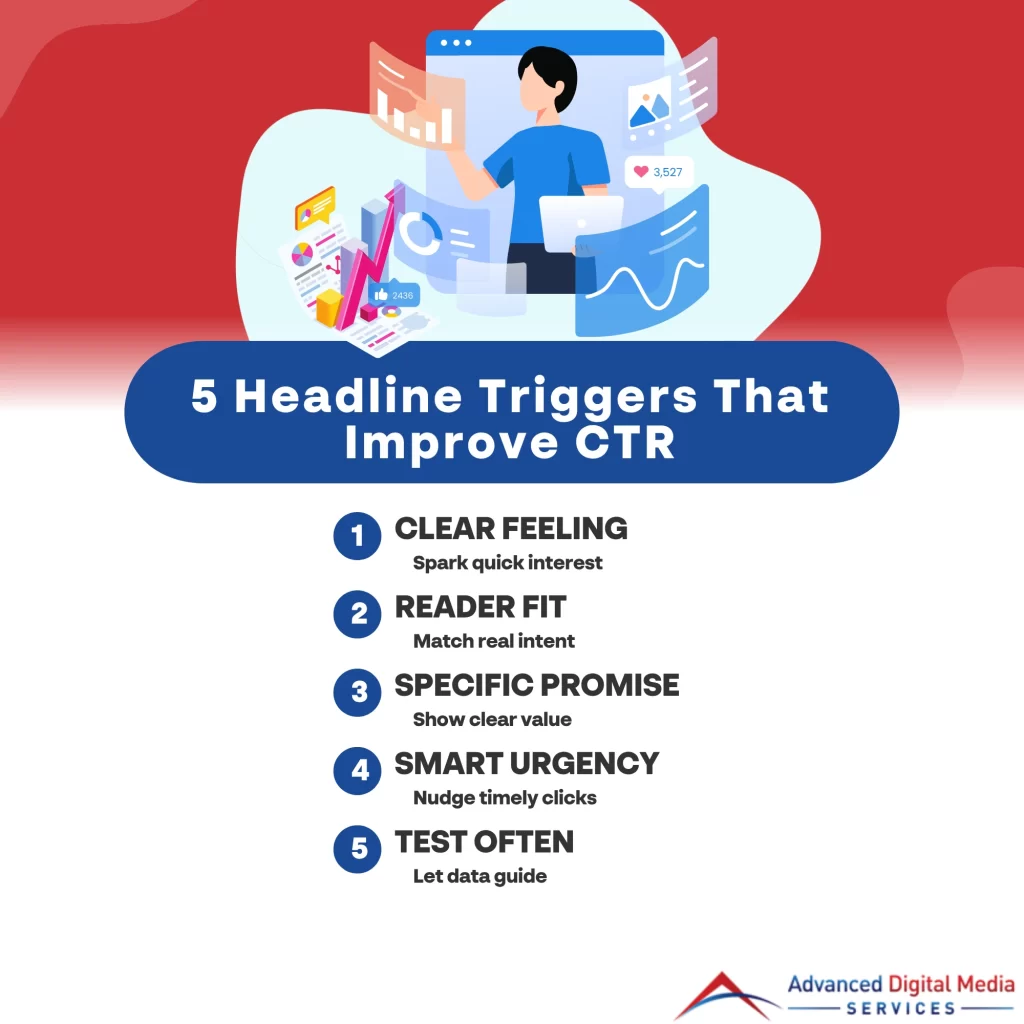
Emotional triggers in headlines can speak to a reader’s need, fear, goal, frustration, or curiosity. A small business owner may click because a headline promises relief from slow leads. A homeowner may click because the title sounds relevant. A restaurant owner in St. Petersburg may click because the headline reflects a busy season, a local crowd, or a real marketing challenge. Good emotional triggers are not dramatic. They are precise. Words like “simple,” “proven,” “costly,” “hidden,” “faster,” “trusted,” and “overlooked” can shift how a headline feels without making it sound fake.
Clarity Still Comes First
Emotion cannot save a vague headline. If the reader does not understand the point, they will keep scrolling. Strong headlines make the value easy to grasp. For example, “Better Blog Titles for More Traffic” is clear, but it is plain. “7 Blog Title Fixes That Can Help You Earn More Clicks” gives the reader a specific reason to care. It creates a useful promise without exaggerating.
Match the Trigger to the Search Intent
The best emotional trigger depends on what the reader is trying to do. A person searching for a quick answer needs a different headline than someone comparing agencies, planning a campaign, or learning how SEO works. Strong headline planning often starts with keyword research, because the search phrase gives clues about what the reader wants next.
Curiosity for Learning-Based Searches
Curiosity works well for educational content. These readers are not always ready to buy. They want insight, a fresh angle, or a practical tip. Examples include: “How One Word Can Change the Way People Read Your Headline” “Why Some Blog Titles Get Clicks While Others Get Skipped” Curiosity should open a loop, not hide the point. The reader should still know what the content is about.
Urgency for Time-Sensitive Offers
Urgency works best when timing is real. It can fit seasonal campaigns, event promotions, service reminders, or limited offers. For a St. Petersburg business, urgency might connect to tourist season, summer storms, holiday shopping, or a busy local event cycle. A good urgent headline could be: “Update Your Local SEO Before the Busy Season Hits” A poor urgent headline would be: “You are Losing Everything If You Do not Click Now” The first gives context. The second feels forced.
Trust for Service-Based Decisions
Trust-based triggers work well for service businesses. Readers want to feel safe before they call, book, or request a quote. Words tied to experience, process, transparency, and support can help. This is especially useful for SEO headlines for small businesses, where the reader may be cautious about cost, timelines, or choosing the wrong marketing partner.
How to Improve Your Headline Click-Through Rate
Your headline click-through rate improves when your title aligns with the page’s promise. A headline should attract the right reader, not just the most readers.
Use Specific Outcomes
Specific headlines feel more useful. They tell the reader what they will gain by clicking. Instead of: “Improve Your Marketing” Try: “5 Headline Fixes That Help Service Pages Get More Clicks” The second version gives the reader a clear outcome. It also sets a reasonable expectation. For businesses publishing blogs, landing pages, and social content, content creation should connect headline ideas to the full message. A strong title brings people in, but the content has to deliver.
Test One Emotional Angle at a Time
Emotional headline copywriting gets stronger when you test it. Try comparing one emotional angle against another instead of changing everything at once. For example: “Simple Headline Tips for Better Blog Traffic” “Overlooked Headline Mistakes That Cost You Clicks” Both speak to the same topic. One uses ease. The other uses loss avoidance. Testing helps you see which emotional angle your audience responds to.
Keep the Promise Honest
Higher CTR is not useful if readers leave right away. A headline that over promises can hurt trust, increase bounce, and weaken conversions. Your headline, intro, and page structure should all support the same promise. That is part of strong SEO services, where search visibility and user experience need to work together.
Local Examples for Better Digital Marketing Headlines
Local businesses do not need generic headlines that sound like every national brand. A good local headline should understand how nearby customers search, compare, and make decisions.
Headlines for Service Businesses
A service company in Pinellas County may need headlines that make trust and convenience clear. Customers often compare options fast between calls, errands, work breaks, or evening research sessions. A St. Petersburg digital marketing agency can help shape those headlines around real search behavior, not just catchy wording. For example: “Need More Local Leads? Start With These Service Page Fixes” “Why Your Website Gets Traffic But Not Enough Calls” These titles speak to problems business owners recognize.
Headlines for Seasonal Campaigns
Seasonal patterns can also shape better titles. Restaurants, home service companies, retail shops, tourism brands, and local professionals often see demand shift throughout the year. For content marketing services St. Petersburg businesses can use, headlines may need to reflect local timing. A summer campaign might focus on readiness, weather-related needs, or vacation traffic. A winter campaign might focus on planning, bookings, or year-end growth. Local intent also matters for visibility. A strong Local SEO strategy helps connect the headline, page content, location signals, and audience expectations. Once users land on the page, clean website design helps them keep moving instead of backing out.
Takeaways
The best emotional triggers in headlines are clear, honest, and tied to real reader intent. They do not trick people into clicking. They help the right person recognize that your content is worth their time. To improve CTR, match the emotional angle to the search goal, keep the promise specific, test different versions, and ensure the page delivers. Strong headlines work even better when they are supported by SEO, content strategy, and a website experience that makes the next step easy.
Frequently Asked Questions
What are emotional triggers in headlines?
Emotional triggers are words or ideas that connect with a reader’s need, concern, goal, or curiosity. They help a headline feel more relevant and worth clicking without changing the core topic.
Do emotional headlines always improve CTR?
Not always. They work best when the emotion matches the reader’s intent and the content delivers on the promise. If the headline feels exaggerated or unclear, it can reduce trust.
What emotional triggers work best for business blogs?
Curiosity, trust, urgency, relief, and confidence often work well for business blogs. The right trigger depends on the topic, audience, and stage of the buyer journey.
How many headline versions should I test?
Start with two or three versions that test different emotional angles. Keep the core topic the same so you can learn which trigger made the biggest difference.
Are emotional headlines bad for SEO?
No, as long as they remain clear and relevant. A headline can include a keyword, answer search intent, and still use emotion to make the title more appealing.
Strengthen Your Headlines with Advanced Digital Media Services
If your blogs, advertisements, service pages, or landing pages are getting seen but not clicked, your headlines may need a sharper strategy. Advanced Digital Media Services can help you connect SEO, content, design, and local search so your titles support real business goals. Call our St. Petersburg office at (727) 201-5296 or visit us at 360 Central Avenue Suite 800, St. Petersburg, FL 33701 to talk about building stronger digital content. Better headlines are a small detail with a big role in search performance, lead generation, and brand trust.