Using keywords naturally means writing for people first and optimizing for search second. Start by matching search intent, then place your primary keyword in high-impact spots like the title, first paragraph, and key headings. From there, use long-tail and semantic phrases to support the topic without repeating the same term over and over. Done right, your content reads smoothly, ranks more consistently, and earns trust instead of sounding robotic. Discover more ways to refine your keyword strategy ahead.
Key Takeaways
- Incorporate primary keywords in titles and headings to signal the main topic clearly without disrupting the natural flow of the content.
- Use keywords within the first 100 words to grab attention while ensuring they fit seamlessly into the context.
- Maintain a natural keyword density of 1-2% to keep the writing engaging and avoid keyword stuffing.
- Employ synonyms and related phrases to diversify language, enhance readability, and keep the content interesting.
- Focus on high-quality, valuable content that naturally integrates keywords, prioritizing user experience over excessive optimization.
Start with Search Intent and Content Quality
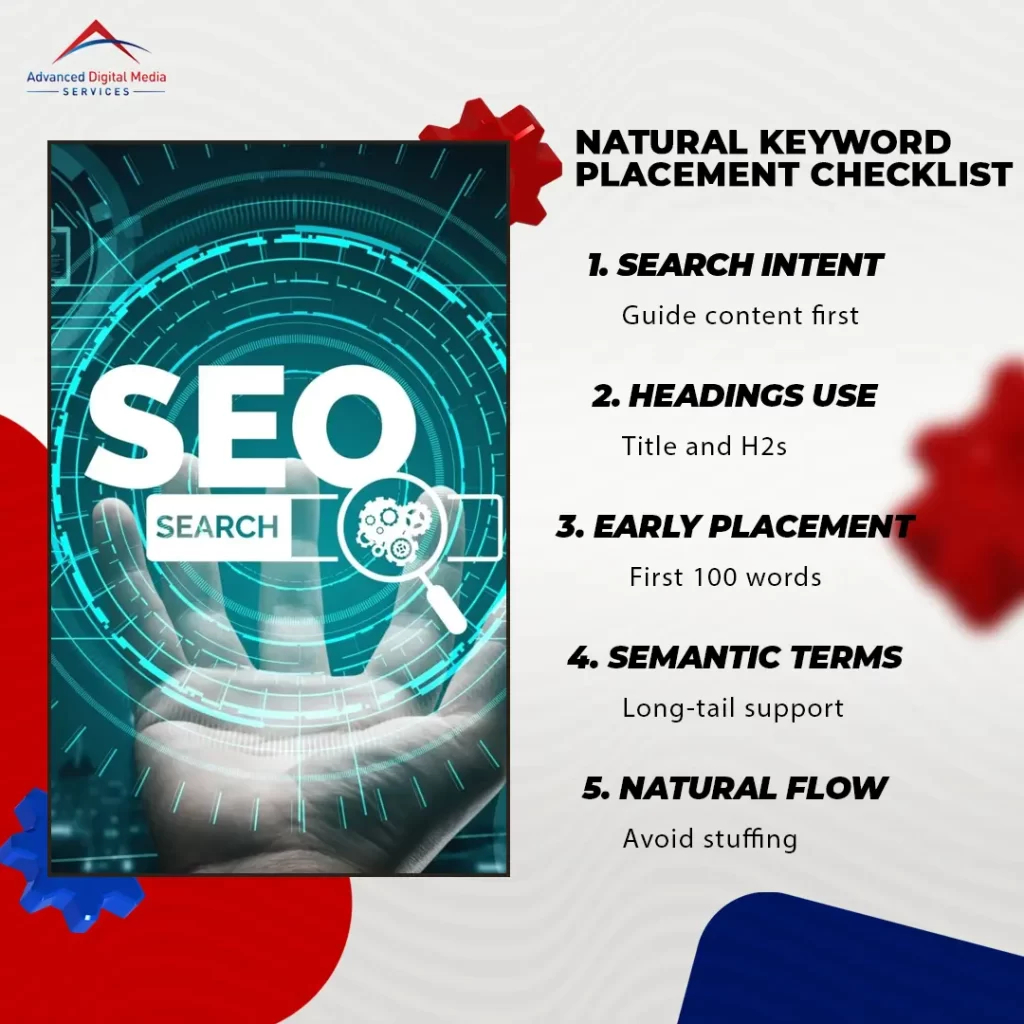
Search intent is the “why” behind a query. Most searches fall into four buckets: informational (learn), commercial (compare), transactional (buy), and navigational (find a site). If your content matches the intent, keywords become easier to place naturally because the page is built to answer what the searcher actually wants.
Writing SEO content that sounds natural to readers
To create SEO content that resonates with readers, it’s essential to prioritize search intent and maintain high content quality. When you’re writing SEO content that sounds natural, think about what your audience truly wants to learn. Use conversational language and avoid stuffing keywords. Instead, integrate them seamlessly so they flow with your writing. This way, your content becomes engaging and informative, keeping readers hooked. Remember, the goal is to provide value while subtly incorporating your keywords. Always focus on clarity and relevance, ensuring your content answers readers’ questions. By doing this, you not only enhance user experience but also improve your chances of ranking higher in search results. Your readers will appreciate the authenticity and usefulness of your content.
Optimizing content for both users and search engines
Optimizing content for both users and search engines starts with understanding search intent and ensuring high content quality. You need to know what your audience is searching for and tailor your content to meet those needs. Focus on delivering valuable information in a clear, engaging way. When optimizing content for readers and search engines, balance is key; use relevant keywords naturally without compromising readability. Create sections that answer common questions, and use headings to improve navigation. Also, incorporate multimedia elements to enhance the user experience. Remember, the ultimate goal is to satisfy both your audience and search engines, leading to better engagement, higher rankings, and increased conversions. Prioritize quality, and your content will thrive.
Place Keywords Strategically, Not Excessively
When it comes to placing keywords in your articles, strategy matters more than sheer volume. You want to incorporate them naturally, ensuring they fit seamlessly within your content instead of forcing them in.
A simple placement map:
- Title: include the primary keyword once
- First 100 words: include it naturally once
- One H2: include it once if it fits
- Body: use variations and related phrases
- Conclusion: reinforce the topic, not repetition
Remember, keyword stuffing can hurt your readability and SEO, so focus on quality over quantity.
Best practices for placing keywords in articles
Although it might be tempting to stuff your articles with keywords, placing them strategically is far more effective for both search engines and your readers. Start by including your primary keyword in the title, as this signals the main topic. Use it within the first 100 words of your content to guarantee it catches attention early. Additionally, sprinkle keywords naturally throughout your headings and subheadings; this not only helps with SEO but also guides readers through your article. Don’t forget about the conclusion—reiterating your keyword here reinforces your topic. Finally, consider synonyms and related phrases to diversify your content while still adhering to the best practices for placing keywords in articles. This approach enhances readability and keeps your audience engaged.
Avoiding keyword stuffing in blog posts
To keep your blog posts engaging and effective, it’s essential to avoid keyword stuffing, which can frustrate readers and harm your SEO efforts. Instead, focus on crafting quality content that naturally incorporates your keywords.
Here are three tips for avoiding keyword stuffing in blog posts:
- Use Synonyms: Incorporate related terms to diversify your language and keep the content interesting.
- Prioritize Readability: Aim for a natural flow; your primary audience should understand and enjoy your writing.
- Limit Keyword Frequency: Use keywords sparingly, ensuring they fit seamlessly rather than forcing them into every sentence.
Keyword stuffing example (bad):
“SEO keywords naturally help SEO keywords naturally rank because SEO keywords naturally matter.”
Natural usage (good):
“Use your main keyword in high-impact spots, then rely on related phrases to keep the writing clear and readable.”
Use Long-Tail and Semantic Keywords
When you’re crafting content, using long-tail keywords can really help you connect with your audience. These specific phrases not only target users more effectively but also improve your chances of ranking higher in search results. Plus, incorporating semantic keywords and related phrases can enhance your content’s relevance in today’s SEO landscape.
Example: If your primary keyword is “use SEO keywords naturally,” your supporting phrases could include:
- “keyword placement best practices”
- “semantic keywords and related phrases”
- “avoid keyword stuffing”
- “write for search intent”
This keeps the page relevant without repeating the same phrase.
Using long-tail keywords in website copy
Using long-tail keywords in your website copy can greatly enhance your content’s relevance and visibility. These specific phrases can attract more targeted traffic, ultimately improving conversion rates.
Here are three key benefits of using long-tail keywords in website copy:
- Higher conversion rates: Long-tail keywords often indicate a stronger intent from users, leading to better engagement.
- Reduced competition: Fewer businesses target long-tail keywords, giving you a better chance of ranking higher in search results.
- Improved content relevance: By incorporating these keywords, your content becomes more aligned with what users are searching for, enhancing their experience.
Semantic keywords and related phrases for modern SEO
Incorporating long-tail keywords is just one part of a broader strategy that includes semantic keywords and related phrases. These elements are essential for modern SEO because they help search engines understand the context and intent behind your content. By using semantic keywords and related phrases, you can enhance your content’s relevance and improve its chances of ranking higher in search results. Think about the different ways users might search for your topic; include variations and synonyms to capture a wider audience. This approach not only boosts your SEO but also creates a more engaging experience for readers. Remember, it’s about connecting with your audience, so be natural and incorporate these phrases seamlessly into your writing.
Integrate Keywords into Headings and Structure
When you integrate keywords into your headings and subheadings, you not only improve your content’s SEO but also enhance its readability. It’s essential to maintain a natural keyword density, especially in the GA4 era, where user engagement signals are key. Use keywords in headings only when they describe the section clearly. A clean heading beats an awkward keyword-stuffed one every time. Let’s explore how to effectively structure your content for both search engines and your audience.
Integrating keywords into headings and subheadings
Headings and subheadings play an essential role in structuring your content and enhancing its readability. When integrating keywords into headings and subheadings, you not only improve SEO but also guide your readers effectively.
Here are three tips to do it naturally:
- Use primary keywords: Place your main keyword at the beginning of headings for maximum impact.
- Keep it relevant: Guarantee your headings reflect the content that follows to maintain reader engagement.
- Maintain clarity: Avoid keyword stuffing; instead, aim for a natural flow that enhances understanding.
Maintaining natural keyword density in the GA4 era
In the GA4 era, performance is strongly tied to user behavior. If your content reads naturally, people stay longer, scroll further, and engage more, which supports stronger long-term results. Instead of chasing a rigid keyword percentage, focus on clear answers, helpful structure, and natural language that matches how people actually search.
Strengthen Content with Internal Links
Using internal links effectively can markedly enhance your content’s SEO and user experience. By incorporating descriptive anchor text, you guide readers to related topics while improving the overall relevance of your content. Smart internal linking not only keeps visitors engaged but also strengthens your site’s structure and authority. Aim for 2–4 internal links per blog post. Use descriptive anchor text (not “click here”), and link only when it genuinely helps the reader go deeper.
Internal linking strategy with descriptive anchor text
While crafting your content, incorporating an internal linking strategy with descriptive anchor text can greatly enhance your site’s usability and SEO performance. By using relevant anchor text, you guide your readers to additional resources and improve the flow of your content.
Here are three key benefits of this strategy:
- Improved Navigation: Descriptive anchor text helps users find related information quickly, keeping them engaged on your site longer.
- SEO Boost: Search engines appreciate a well-structured internal linking strategy, which can improve your site’s overall ranking.
- Topical Authority: Linking to relevant pages reinforces your expertise in specific areas, enhancing your site’s credibility.
Improving topical relevance with smart internal links
To enhance your content’s topical relevance, incorporating smart internal links is essential. By linking related articles, you guide your readers through a cohesive experience, making it easier for them to find valuable information. This not only improves user engagement but also signals to search engines that your content is well-structured.
When you use internal links strategically, it enhances your on-page SEO. For instance, if you’re offering on-page SEO content optimization services in St. Petersburg, FL, link to articles discussing keyword usage or meta tags. This creates a thorough resource for your audience while boosting your site’s authority. Ultimately, smart internal linking helps establish a clear topical focus, improving your site’s ranking potential and user satisfaction.
Balance Rankings with Readability and Authority
When you’re creating content, it’s essential to strike a balance between ranking well and keeping it readable. High-quality, engaging writing not only helps with SEO but also establishes your authority on the topic.
Quick authority boosters that still read naturally:
- Add one short example per major point.
- Include a mini checklist or framework.
- Answer a common follow-up question in each section.
- Summarize in plain language before moving on.
By focusing on professional SEO copywriting, you can enhance both the consistency of your content and its appeal to readers.
Creating high-quality content that still ranks
Creating high-quality content that ranks well in search engines requires a delicate balance between readability and authority. You want your audience to engage with your content while still meeting SEO standards.
Here are three tips for creating high-quality content that still ranks:
- Use clear, concise language: Avoid jargon and keep sentences straightforward to enhance understanding.
- Incorporate keywords naturally: Seamlessly weave in your target keywords without forcing them; it should feel organic.
- Structure your content effectively: Use headings, bullet points, and short paragraphs to improve readability and keep readers engaged.
How professional SEO copywriting improves consistency
While many businesses focus solely on attracting traffic, professional SEO copywriting guarantees that your content not only ranks well but also maintains a consistent voice and message. This consistency is essential for building trust with your audience. When you use a cohesive style and tone throughout your content, readers are more likely to engage with your brand. Advanced Digital Media Services (ADMD) demonstrates how ADMS helps clients with keyword-optimized blogs that not only boost search rankings but also resonate with readers. By weaving keywords seamlessly into your writing, you enhance both readability and authority. This balance assures that your content serves its purpose: attracting traffic while delivering valuable information that keeps your audience coming back for more.
Improve Your Keyword Strategy with Advanced Digital Media Services
To enhance your keyword strategy effectively, partnering with Advanced Digital Media Services can make a significant difference. We focus on optimizing your content to align with natural keyword density guidelines for the GA4 era.
Here are three ways we can help you:
- Tailored SEO Strategies: They analyze your industry and audience to create customized keyword plans.
- Data-Driven Insights: By leveraging analytics, they guarantee your keywords resonate and convert effectively.
- Ongoing Optimization: Their team continuously refines your strategy based on performance metrics and trends.
Frequently Asked Questions
How Many Keywords Should I Use per Article?
Use one primary keyword and a handful of supporting phrases. If the content reads naturally and stays focused, you’re doing it right.
Can Keyword Stuffing Harm My SEO Efforts?
Yes, keyword stuffing can harm your SEO efforts. Search engines prioritize content that reads naturally and provides value to users. Focus on quality and relevance instead of cramming in keywords; it’ll yield better results.
What Tools Can Help With Keyword Research?
You can use tools like Google Keyword Planner, SEMrush, and Ahrefs for keyword research. These platforms provide insights into search volume, competition, and trends, helping you identify the best keywords for your content strategy.
How Often Should I Update My Keywords?
Review keywords when performance changes, the SERP changes, or your services shift. A quarterly check is a good baseline, but intent matters more than a calendar.
Is It Necessary to Include Keywords in Image Alt Text?
Yes, it’s necessary to include keywords in image alt text. This helps search engines understand your images better, improving your site’s SEO and making it more accessible to users who rely on screen readers.
Conclusion
Using keywords naturally comes down to intent, structure, and clarity. Place your primary keyword where it matters, support it with semantic phrases, and write like you’re explaining the topic to a real person. When the page reads well, it performs better and builds trust simultaneously.