The evolution of search engine algorithms has fundamentally changed how content ranks and is accessed online. Early algorithms relied on basic keyword matching, leading to issues like keyword stuffing. Major updates, such as Google Panda and Hummingbird, shifted the focus to quality content and understanding user intent through AI and machine learning. Now, a strong emphasis is placed on context and semantic search. To stay ahead in this landscape, you might find some valuable insights waiting for you.
Key Takeaways
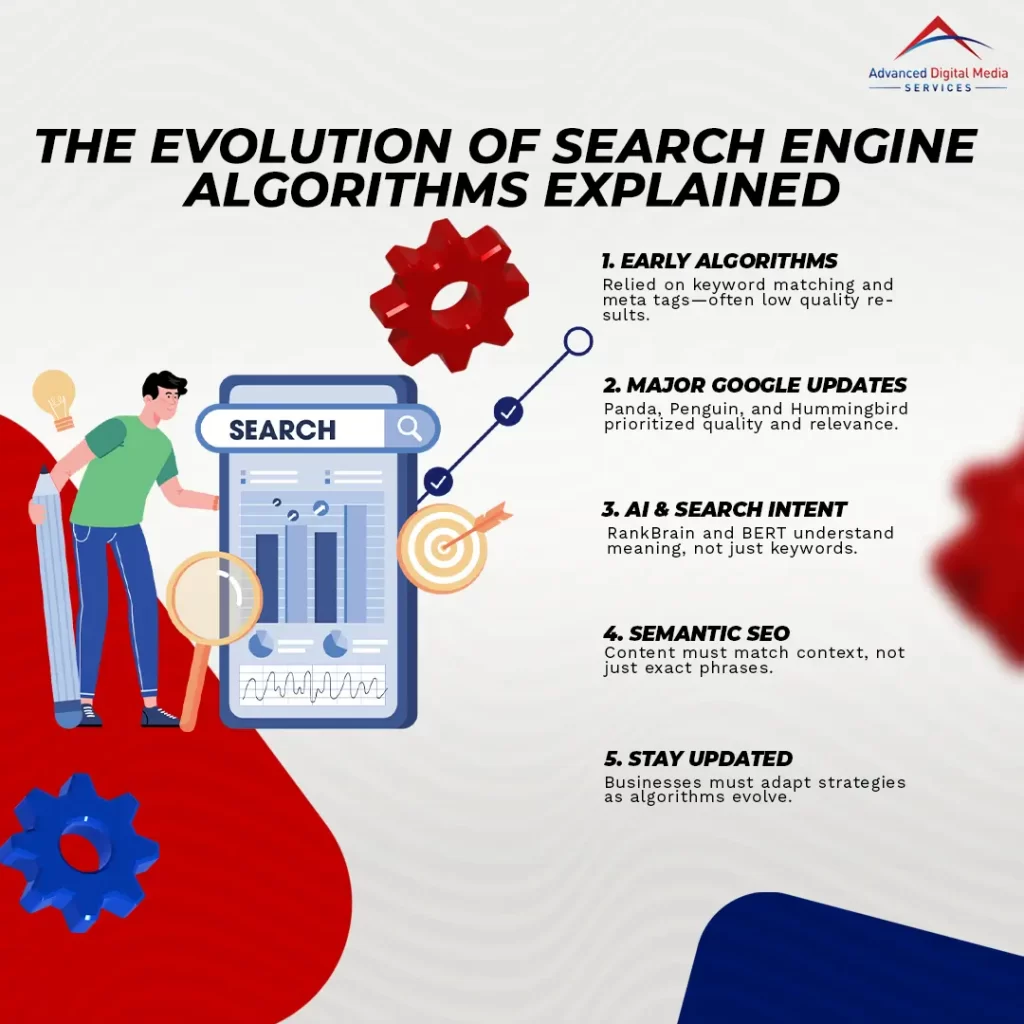
- Early search engines relied on basic keyword matching and meta tags, leading to ineffective results and keyword stuffing by webmasters.
- Major updates like Google Panda, Penguin, and Hummingbird shifted focus from low-quality content and manipulative tactics to high-quality, contextually relevant material.
- AI and machine learning, particularly RankBrain and BERT, enhanced the understanding of user intent and query context, improving search result relevance.
- Semantic search emphasizes the importance of high-quality, context-rich content and structured data for better visibility and interpretation by search engines.
- Businesses must adapt continuously to SEO best practices, focusing on user experience and regular updates to maintain visibility amidst evolving algorithms.
The Early Days of Search Engine Algorithms
In the early days of search engine algorithms, you’d notice that basic keyword matching and reliance on meta tags were the primary methods for ranking websites. However, these approaches often led to limitations in accuracy and relevance, making it tough to find the most suitable results. As you explore this period, you’ll see how these foundational techniques paved the way for more sophisticated algorithms.
Basic Keyword Matching and Meta Tag Reliance
In the early stages of search engine algorithms, relevance was primarily determined by simple keyword matching and the use of meta tags. As a user, you’d often find that the search engine ranking factors were quite simplistic. If a webpage contained the right keywords in its title or meta description, it would likely rank higher. This meant that website creators focused primarily on stuffing keywords into their content, hoping to improve visibility. Meta tags became essential, as they provided search engines with important information about the page. However, this approach often led to irrelevant results, as algorithms couldn’t accurately assess content quality or user intent. While effective at first, this method paved the way for more sophisticated techniques in search engine optimization.
Limitations of Early Search Accuracy and Relevance
Although early search engines changed how people found information online, they often struggled to deliver accurate and relevant results. You might recall how search results were frequently cluttered with irrelevant pages, leaving users frustrated. These engines primarily relied on basic keyword matching, which meant they couldn’t understand context or user intent. As a result, many searches led to disappointing outcomes, hindering the overall user experience. While there were some search relevance improvements over time, the algorithms couldn’t yet adapt to the evolving needs of users. This limitation highlighted the necessity for more sophisticated approaches, paving the way for the advanced algorithms we see today that prioritize context, user behavior, and content quality to deliver more meaningful search results.
Major Algorithm Updates That Changed SEO
When it comes to SEO, major algorithm updates like Google Panda, Penguin, and Hummingbird have reshaped how you approach content and links. These updates emphasize the importance of quality content and natural link-building strategies. Let’s explore how these changes impact your SEO efforts today.
Google Panda, Penguin, and Hummingbird Explained
Since the inception of search engines, major algorithm updates like Google Panda, Penguin, and Hummingbird have dramatically reshaped SEO practices. These Google algorithm updates focused on improving user experience and delivering relevant content. Panda, launched in 2011, targeted low-quality content, pushing sites with thin or duplicate material down in search rankings. Penguin followed in 2012, penalizing sites engaged in manipulative link-building tactics. Then in 2013, Hummingbird introduced a semantic search approach, allowing Google to understand queries contextually rather than just keyword-based. Each update forced webmasters to adapt their strategies, emphasizing quality over quantity. By understanding these changes, you can better align your SEO efforts with search engine expectations and enhance your online visibility effectively.
The Shift Toward Quality Content and Natural Links
As search engines evolved, the emphasis shifted considerably toward quality content and natural links, transforming the SEO landscape. You may have noticed that algorithm updates like Google’s Panda and Penguin prioritized websites offering valuable, relevant information over those employing manipulative tactics. This means that to succeed, you need to focus on creating quality content that genuinely serves your audience’s needs. Natural links, which arise from reputable sources recognizing your content’s value, are now essential for improving your site’s authority. By prioritizing quality content and fostering organic link-building, you’ll not only enhance your search rankings but also build trust with your audience. It’s all about delivering real value in a way that resonates with users and search engines alike.
The Role of AI and Machine Learning in Modern Search
AI and machine learning are transforming how search engines understand user intent and context. With innovations like RankBrain and BERT, you’re seeing a shift towards more nuanced interpretations of queries. It’s essential to adapt your SEO strategies for this semantic search landscape to stay ahead.
How RankBrain and BERT Interpret Search Intent
While search engines have always aimed to deliver relevant results, the introduction of RankBrain and BERT has revolutionized how search intent is interpreted. These AI-driven algorithms mark a significant step in the semantic search evolution, allowing search engines to understand not just keywords but the context behind them. With RankBrain, Google can process complex queries, learning from user interactions to improve its understanding over time. BERT, on the other hand, excels at grasping nuances in language, ensuring that the search results align more closely with what users truly mean. By focusing on intent rather than mere keyword matching, these innovations enhance the search experience, making it easier for you to find exactly what you’re looking for.
Adapting SEO Strategies for Semantic Search
To effectively adapt your SEO strategies for semantic search, understanding the role of AI and machine learning is crucial. These technologies help search engines grasp user intent beyond simple keyword matching. To align with SEO best practices, focus on creating high-quality, context-rich content that answers users’ questions. Use structured data to enhance your content’s visibility and improve how search engines interpret it.
Incorporate natural language processing to make your content more relatable and conversational. Additionally, consider user experience; make sure your website is easy to navigate and loads quickly. By embracing these techniques, you’re not just optimizing for algorithms but also providing real value to your audience, ultimately enhancing your online presence in the era of semantic search.
What Businesses Need to Know Today
Today’s digital landscape is constantly shifting, and it’s essential for your business to stay compliant with the latest SEO best practices. Utilizing the expertise of Advanced Digital Media Services can help you effectively navigate these algorithm changes. By doing so, you can enhance your online presence and guarantee long-term growth.
Staying Compliant with Evolving SEO Best Practices
As search engine algorithms constantly evolve, businesses must stay informed about the latest SEO best practices to maintain their online visibility. Ignoring these changes can lead to serious consequences, including keyword stuffing penalties that may drastically affect your rankings. To guarantee compliance, focus on creating high-quality, relevant content that naturally incorporates keywords without overloading. Regularly update your website, optimize for mobile devices, and improve loading times to enhance user experience. Monitor your analytics to understand how changes impact your traffic and engagement. Additionally, stay connected with industry news to catch any shifts in guidelines. By adapting to these evolving practices, you’ll not only avoid penalties but also position your business for long-term success in a competitive digital landscape.
Leveraging ADVDMS Expertise to Navigate Algorithm Changes
Staying informed about evolving SEO best practices can feel overwhelming, especially with search engine algorithms changing frequently. That’s where ADVDMS comes in. Their expertise can help you navigate these shifts, minimizing risks of algorithmic penalties and speeding up recovery if needed. Here’s how you can leverage their skills:
- Customized SEO Strategies: ADVDMS tailors solutions to fit your unique business needs.
- Continuous Monitoring: They provide ongoing analysis of your website’s performance to adapt quickly to algorithm changes.
- Recovery Plans: Should you face any algorithmic penalties, ADVDMS has recovery strategies to restore your rankings.
Frequently Asked Questions
How Do Search Engine Algorithms Determine Ranking Factors?
Search engine algorithms determine ranking factors by analyzing content relevance, user engagement, and website authority. They consider keywords, backlinks, and page speed, ensuring you provide valuable information that meets user needs for better visibility online.
Can I Influence Search Engine Algorithms Directly?
Imagine planting seeds in a garden, nurturing them with care. You can’t directly control the sun or rain, but by tending to your soil—optimizing your content and user experience—you can influence the growth of your online presence.
What Are Black Hat SEO Practices to Avoid?
You should avoid black hat SEO practices like keyword stuffing, cloaking, and buying backlinks. These tactics might provide short-term gains, but they can lead to penalties, harming your site’s credibility and long-term success.
How Often Do Search Engine Algorithms Change?
Search engine algorithms frequently change, sometimes several times a day. For instance, Google’s core updates can greatly impact rankings overnight. Staying informed and adaptable guarantees your SEO strategy remains effective amidst these changes.
What Tools Can Help Analyze Algorithm Impacts?
To analyze algorithm impacts, you can use tools like Google Analytics, SEMrush, or Ahrefs. These platforms provide insights into traffic changes, keyword rankings, and overall site performance, helping you adapt your strategies effectively.
Conclusion
As you reflect on the evolution of search engine algorithms, you can’t help but wonder: what’s next? With AI and machine learning shaping the future, the landscape of SEO is about to shift again. Are your strategies ready to adapt? The digital world waits for no one, and those who stay ahead of the curve will thrive. Keep your finger on the pulse, because the next big update could change everything you thought you knew about online success.