Mobile SEO is essential for improving your Google rankings. It directly impacts user experience since more users now search on their mobile devices. A well-optimized mobile site boosts your visibility and lowers bounce rates by ensuring quick load times and easy navigation. Google prioritizes sites that offer seamless mobile experiences, making it vital for your online presence. Keep exploring to discover deeper insights into optimizing your site for mobile success and enhancing your search performance.
Key Takeaways
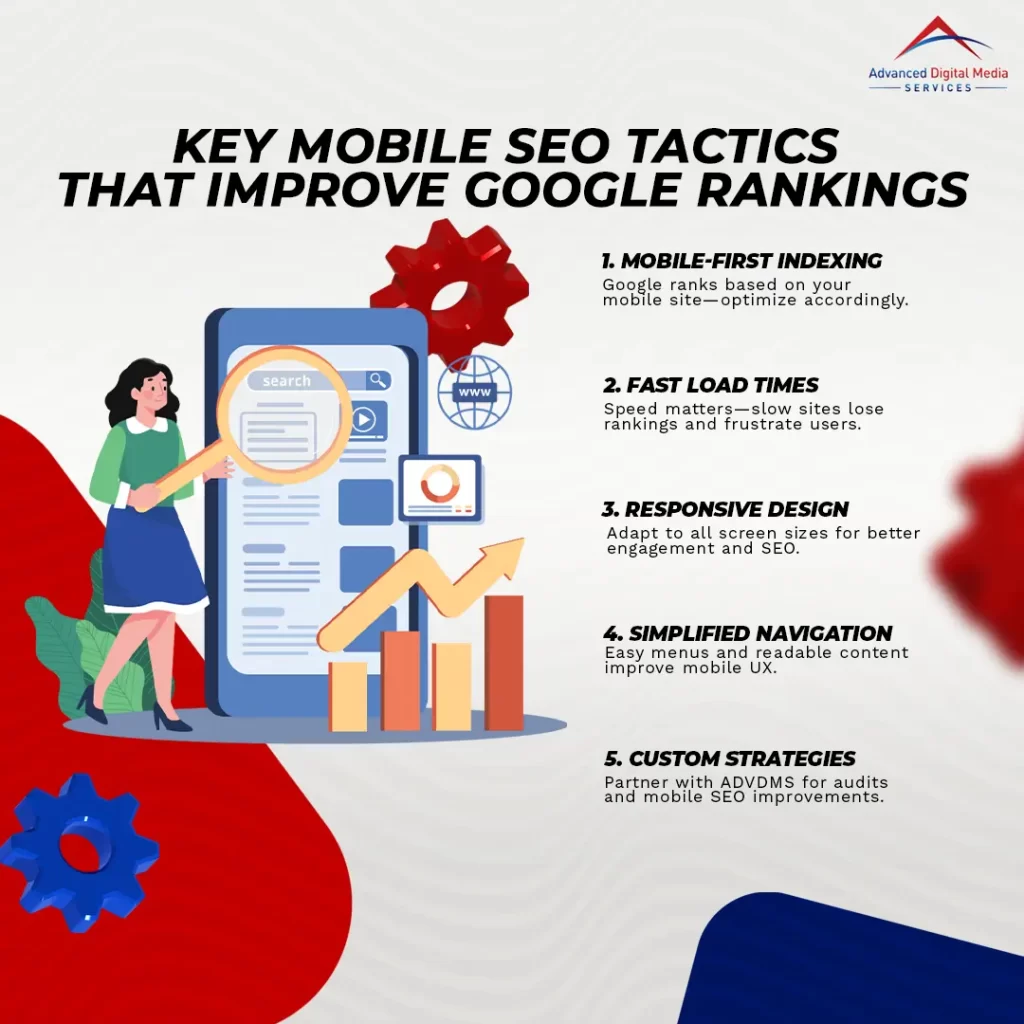
- Google uses the mobile version of websites as the primary factor for ranking, making mobile optimization essential for visibility.
- Poorly optimized mobile sites can result in higher bounce rates, negatively impacting search rankings and user retention.
- Page speed is a crucial element in mobile SEO, directly affecting user experience and search engine rankings.
- Implementing a mobile-friendly design enhances usability, leading to increased engagement and lower bounce rates.
- Regular testing and optimization for mobile usability are vital to maintaining a competitive edge in search rankings.
Understanding Mobile SEO and Its Role in Google Rankings
When you think about mobile SEO, it’s essential to understand what it involves and how it affects your site’s visibility on Google. With Google’s mobile-first indexing, your mobile site is often the primary version that gets ranked, impacting how well you show up in search results. Let’s explore how optimizing for mobile can make a significant difference in your rankings.
What Mobile SEO Involves
Understanding mobile SEO is essential for improving your site’s visibility in Google rankings, especially as more users access the internet via mobile devices. Mobile SEO involves optimizing your site to guarantee it’s user-friendly and accessible on smartphones and tablets. This means creating a mobile-friendly website that loads quickly and displays properly on smaller screens. You should also focus on local SEO strategies, as many mobile users search for nearby services. Additionally, using structured data helps search engines understand your content better. Don’t forget to prioritize easy navigation and engaging content, as these factors enhance user experience. By implementing these mobile SEO practices, you’ll increase your chances of ranking higher and attracting more visitors to your site.
How Google’s Mobile-First Indexing Impacts Visibility
Google’s shift to mobile-first indexing means your site’s mobile version is now the primary factor for ranking in search results. This change emphasizes the need for an optimized mobile experience, as Google primarily crawls and indexes mobile sites. If your site isn’t mobile-friendly, you’ll likely see a drop in visibility. With mobile-first indexing, it’s vital to guarantee your content, images, and overall design are tailored for mobile users. A poorly optimized mobile site can lead to higher bounce rates, negatively impacting your rankings. Remember, Google prioritizes sites that deliver a seamless mobile experience, so investing in mobile SEO is essential. Stay ahead by regularly testing your site’s usability and performance on mobile devices to maintain and improve your visibility.
Key Mobile SEO Factors That Affect Search Performance
To improve your search performance, focusing on mobile-friendly design and responsive layouts is essential. You also can’t overlook page speed and Core Web Essentials, as they play a significant role in how users experience your site. Let’s explore these key factors and see how they can boost your mobile SEO efforts.
Mobile-Friendly Design and Responsive Layouts
A mobile-friendly design is essential for your website’s success in today’s digital landscape. When you prioritize mobile usability, you create a seamless experience for users on their smartphones and tablets. Responsive layouts automatically adjust to different screen sizes, ensuring that your content is easily accessible and visually appealing. This adaptability not only enhances user satisfaction but also plays a vital role in your search engine rankings. Google favors sites that provide excellent mobile experiences, meaning a well-optimized design can lead to increased visibility. By focusing on mobile usability and responsive design, you’re more likely to engage visitors, reduce bounce rates, and ultimately improve your site’s performance in search results. Make your site work for every device, and watch your rankings soar.
Page Speed and Core Web Vitals Optimization
While you may have a beautifully designed website, it won’t perform well if it’s sluggish. One significant factor influencing your mobile SEO is mobile page load time. If your pages take too long to load, users will bounce, leading to higher abandonment rates and lower search rankings. Google prioritizes sites that offer a fast and smooth experience, so optimizing your Core Web Vitals is imperative. Focus on metrics like Largest Contentful Paint (LCP), First Input Delay (FID), and Cumulative Layout Shift (CLS) to guarantee your site meets performance benchmarks. By enhancing these aspects, you’ll not only improve user experience but also boost your visibility in search results, ultimately driving more traffic to your site. Remember, speed matters!
Enhancing User Experience for Mobile Visitors
To enhance user experience for your mobile visitors, you’ll want to focus on simplifying navigation and improving readability on smaller screens. Reducing pop-ups and ensuring tap targets are easy to use can make a big difference in how users interact with your site. By prioritizing these elements, you can create a smoother, more enjoyable experience that keeps visitors engaged.
Simplifying Navigation and Readability on Small Screens
Over 50% of web traffic now comes from mobile devices, making it essential to simplify navigation and enhance readability for small screens. To align with mobile SEO best practices, consider these strategies:
- Use a responsive design that adjusts to different screen sizes.
- Prioritize concise content with clear headings for easy scanning.
- Implement easy-to-tap buttons and links to reduce frustration.
- Limit the number of menu items for straightforward navigation.
Reducing Pop-Ups and Improving Tap Targets
As mobile users navigate websites, reducing pop-ups and improving tap targets becomes essential for enhancing their experience. Pop-ups can disrupt your visitors’ flow, leading to frustration and potential bounce rates. By minimizing these interruptions, you create a smoother interaction that encourages users to stay on your site longer.
Additionally, improving tap targets—like buttons and links—ensures users can easily engage with your content without accidental clicks. Make sure these elements are large enough and spaced appropriately to enhance the user experience on mobile. Together, reducing pop-ups and improving tap targets not only boosts user satisfaction but also positively impacts your Google rankings. Ultimately, a seamless mobile experience translates to better engagement and conversions for your business.
How ADMS Helps Businesses Optimize for Mobile SEO
When it comes to optimizing for mobile SEO, ADMS has you covered with tailored solutions that fit your needs. Their technical audits pinpoint performance issues, while custom optimization strategies target higher rankings. You’ll see how these focused efforts can elevate your mobile presence and drive more traffic to your site.
Technical Audits and Performance Enhancements
While many businesses recognize the importance of mobile optimization, they often overlook the technical aspects that can greatly impact their search rankings. Technical audits are essential for identifying issues affecting mobile ranking factors. ADMS focuses on enhancing your website’s performance with tailored strategies, ensuring you stay competitive.
Key areas we address include:
- Page speed optimization: Ensuring your site loads quickly on mobile devices.
- Mobile-friendly design: Creating responsive layouts that improve user experience.
- Structured data: Implementing schema markup to enhance search visibility.
- Error identification: Detecting and fixing crawl errors that hinder search indexing.
Custom Mobile Optimization Strategies for Higher Rankings
To enhance your mobile search engine rankings significantly, developing tailored optimization plans is crucial. At ADMS, we recognize that each business has unique needs. That’s why we tailor our mobile search optimization strategies specifically for you. We start by analyzing your current mobile performance, identifying areas for improvement. Our team focuses on enhancing user experience with responsive design and fast loading times, ensuring visitors stay engaged. Additionally, we optimize your content for mobile users, utilizing keywords effectively to increase visibility in search results. By integrating local SEO tactics, we help you reach nearby customers who are searching for your services. With our personalized approach, you’ll see higher rankings and improved online presence, driving more traffic and conversions.
Frequently Asked Questions
How Does Mobile SEO Differ From Traditional SEO?
Mobile SEO focuses on optimizing your site for mobile devices, ensuring fast loading times and a responsive design. Traditional SEO, however, emphasizes desktop experiences. Both aim for visibility, but user behavior and context differ considerably.
What Tools Can Assist in Mobile SEO Optimization?
When it comes to mobile SEO optimization, you’ve got a treasure trove of tools at your fingertips. Google Search Console, Mobile-Friendly Test, and PageSpeed Insights can help you enhance your site’s performance and user experience.
How Does Page Speed Impact Mobile SEO Rankings?
Page speed greatly impacts your mobile SEO rankings. If your site’s slow, users will leave, increasing bounce rates. Fast-loading pages improve user experience, leading to better engagement and higher rankings in search engine results. Keep it quick!
Are There Specific Keywords for Mobile SEO?
Yes, there are specific keywords for mobile SEO. You should focus on long-tail keywords, local terms, and phrases that reflect mobile user intent, ensuring your content aligns with what users search for on their devices.
How Can Local SEO Benefit Mobile Users?
Local SEO helps you connect with mobile users by ensuring your business appears in relevant searches nearby. It drives foot traffic, enhances visibility, and provides essential information like hours and directions, making it easier for customers to find you.
Conclusion
In a world where mobile devices reign supreme, embracing mobile SEO isn’t just a good idea—it’s essential for your website’s success. By fine-tuning your site for mobile users, you’re not just enhancing their experience; you’re also giving your Google rankings a much-needed boost. So, take the leap and invest in mobile optimization. It’s a small step that can lead to big rewards, helping you stand out in the crowded digital landscape.