
A meta tag is a short piece of code on your website that tells search engines what your page is about, kind of like a label or name tag. It doesn’t show up on the page itself, but it lives in the HTML and helps Google understand your title, description, and how to display your page in search results. When you set up clear, accurate meta tags on how to write effective Meta Tags for SEO, it becomes easier for people to find your site and know what they’ll see before they click.
Key Takeaways
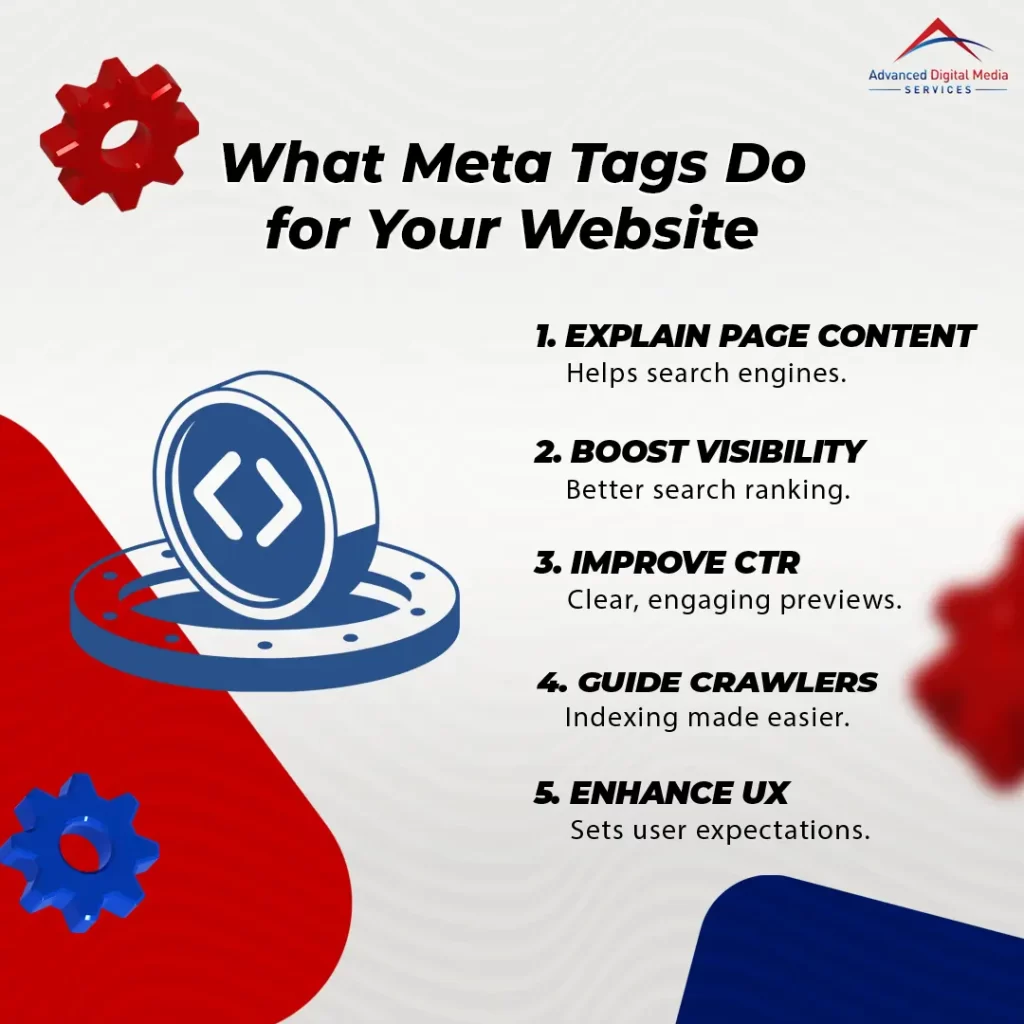
- Meta tags are hidden HTML elements that describe the content of a web page.
- They help search engines understand the relevance and value of a page.
- Common types include meta titles, descriptions, and robots tags.
- Optimized meta tags improve search visibility and click-through rates.
- They set user expectations and enhance the overall user experience on the web.
Understanding Meta Tags in Simple Terms
Meta tags are snippets of text that describe your web pages and are hidden in the HTML. They play a vital role in helping search engines understand what your content is about. By optimizing these tags, you can improve your site’s visibility in search results.
What meta tags are and where they appear on your website
Tags play an essential role in how search engines and users understand your website’s content. Meta tags are snippets of text that provide information about your web pages. They’re not visible on the page itself but exist in the HTML code, typically within the head section. These tags include elements like the title tag, description tag, and keywords tag, all of which serve to boost your site’s meta tags for better search visibility. When search engines crawl your site, they read these tags to determine the relevance and context of your content. By optimizing your meta tags, you can enhance your site’s chances of ranking higher in search results, ultimately driving more traffic to your website.
How they help search engines understand your web pages
When it comes to improving your website’s visibility, understanding how meta tags function can be a game-changer. These tags provide essential information to search engines, helping them comprehend your content better. Here’s how they do it:
- Meta Description Tag: This tag summarizes your page, influencing click-through rates when it appears in search results.
- Title Tag: It tells search engines what your page is about and plays a significant role in ranking.
- Keywords Tag: Though less influential now, it can hint at your page’s focus.
The Different Types of Meta Tags Explained
When it comes to meta tags, there are several key types you should know about. The meta title and meta description play essential roles in grabbing attention in search results, while meta keywords have fallen out of favor. You’ll also want to understand additional tags like robots and viewport, as they can impact how your site is indexed and displayed.
Meta title — the clickable headline seen in search results
The meta title is like a storefront sign for your webpage, serving as the clickable headline that appears in search results. It’s vital for attracting visitors and improving your SEO. Here are three key aspects to remember about your meta title:
- Relevance: Make certain your meta title accurately reflects the content of your page. This helps users know what to expect.
- Length: Keep it under 60 characters to guarantee it displays properly in search results without getting cut off.
- Keywords: Incorporate relevant keywords naturally. This boosts your chances of appearing in search results when users search for those terms.
Meta description — the short summary that attracts clicks
A compelling meta description acts as a short summary that draws users in, enticing them to click on your link in search results. This brief snippet, usually around 150-160 characters, provides essential information about your content, helping potential visitors determine if it meets their needs. When crafting a meta description, focus on clarity and relevance, incorporating target keywords naturally. Remember, it’s not just about keywords; it’s also about creating a sense of urgency or curiosity that encourages clicks. A well-written meta description — the short summary that attracts clicks — can greatly impact your click-through rate and improve your search rankings. So, take the time to perfect this vital element of your digital marketing strategy!
Meta keywords and why they’re no longer used for rankings
Although many website owners once relied on meta keywords to boost their search engine rankings, this practice has fallen out of favor. Search engines have evolved, and using meta keywords offers little to no benefit today. Here are three reasons why:
- Search Engine Algorithms: Major search engines like Google no longer consider meta keywords in their ranking algorithms.
- Keyword Stuffing: The misuse of meta keywords led to spammy practices, diluting their effectiveness.
- Focus on Quality Content: Search engines now prioritize high-quality content and user experience over keyword density.
Instead of focusing on outdated meta tags, concentrate on optimizing your meta descriptions and improving your click-through rate (CTR) to attract more visitors and enhance your website’s performance.
Other useful tags, like robots and viewport tags
While meta keywords have become obsolete in the domain of SEO, other meta tags still hold significant value for optimizing your website. Two key examples are the robots and viewport tags. The robots tag tells search engines which pages to index or avoid, helping you control how your content appears in search results. This can be vital for protecting sensitive information or managing duplicate content. On the other hand, the viewport tag is fundamental for mobile responsiveness. It guarantees your website displays correctly on different devices, enhancing user experience. By utilizing these other useful tags like robots and viewport tags, you can improve your site’s SEO performance and user engagement, ultimately driving more traffic and conversions.
Why Meta Tags Are Important for SEO
Meta tags play a vital role in your website’s SEO strategy. They not only influence how search engines see your content but also help improve your click-through rates with compelling descriptions. Plus, well-crafted meta tags can build trust with both users and Google, making them essential for your online success.
How They Influence Search Engine Visibility
When you optimize your website for search engines, you can’t overlook the importance of meta tags in enhancing your online visibility. These small snippets of code can greatly affect how your site appears in search results. Here’s how meta tags influence your visibility:
- Keyword Relevance: Properly optimized meta tags help search engines understand your content, improving your rankings.
- Search Snippet Appeal: Eye-catching titles and descriptions attract users, increasing your click-through rate (CTR).
- User Experience: Meta tags provide context, helping users decide if your content meets their needs.
The Role of Meta Descriptions in Improving Click-Through Rates
Crafting compelling meta descriptions is essential for improving click-through rates (CTR) on search engine results pages. A well-written meta description acts as a mini-ad for your content, enticing users to click on your link instead of others. To make it effective, keep it concise—around 150-160 characters—and include relevant keywords that match users’ search intent. Highlight what makes your content unique and valuable. This not only grabs attention but also informs potential visitors about what they’ll find, increasing the likelihood of clicks. Remember, an engaging meta description can greatly boost your visibility in search results, leading to more traffic and better engagement with your site. Prioritize crafting meta descriptions that resonate with your audience.
Why Well-Written Meta Tags Build Trust with Users and Google
Well-written meta tags play an essential role in establishing trust with both users and search engines like Google. When you optimize your meta tags, you’re not just boosting your SEO; you’re also enhancing the user experience. Here’s why meta tags are important for SEO:
- Clear Expectations: They provide users with a snapshot of your content, helping them decide if it’s relevant to their needs.
- Improved Click-Through Rates: Catchy and informative meta descriptions can increase clicks from search results, signaling to Google that your content is valuable.
- Authority Building: Meta tags that accurately reflect your content establish credibility, encouraging users to trust your site.
Tips for Writing Effective Meta Tags
When it comes to writing effective meta tags, you want to use primary keywords naturally and strategically. It’s also essential to keep your titles and descriptions within ideal length limits for better visibility. Finally, make sure every page’s meta tags are unique and relevant to maximize their impact.
Using Primary Keywords Naturally and Strategically
To effectively enhance your website’s visibility, using primary keywords in your meta tags is crucial. These keywords help your content stand out when meta tags appear in Google search results. Here are some tips to use them naturally and strategically:
- Research Your Keywords: Identify the keywords that best represent your content and audience interests.
- Incorporate Naturally: Instead of stuffing keywords, weave them seamlessly into your titles and descriptions.
- Focus on Relevance: Confirm your keywords accurately reflect the content on your page, improving user experience and click-through rates.
Keeping Titles and Descriptions Within Ideal Length Limits
Keeping your titles and descriptions within ideal length limits is essential for maximizing their effectiveness in search results. Aim for around 50-60 characters for your meta title and 150-160 characters for your meta description. Staying within these character limits for the meta title and description guarantees that your content displays fully on search engine results pages, making it more likely to attract clicks. If your titles or descriptions are too long, they may get cut off, losing valuable information and impact. Remember, concise and clear wording can help convey your message effectively while also meeting the character limits. Use this opportunity to engage users and encourage them to click through to your website, driving traffic and improving your online presence.
Making Page’s Meta Tags Unique and Relevant
Creating unique and relevant meta tags for each page of your website is essential for enhancing your search visibility. By making every page’s meta tags unique and relevant, you’ll improve your chances of attracting the right audience. Here are three tips to get you started:
- Tailor Titles and Descriptions: Reflect the content of each page accurately to entice clicks.
- Include Keywords: Use relevant keywords that align with the page’s focus; this helps search engines understand your content.
- Avoid Duplication: Each page should have distinct tags to prevent confusion and improve SEO performance.
This beginner’s guide to meta tags in SEO will help guarantee your website stands out and drives more traffic. Remember, uniqueness is key!
Optimize Your Website’s Meta Tags with ADMS Advanced Digital Media Services
If you want to boost your website’s visibility and performance, optimizing your meta tags is essential. At Advanced Digital Media Services, you’ll find expert SEO strategies tailored to attract clicks and improve your rankings. Contact ADMS today to get a thorough audit and start enhancing your site’s Google results.
Expert SEO Services to Enhance Your Site’s Visibility and Performance
Meta tags are essential components of your website’s SEO strategy, playing a significant role in how search engines interpret and rank your content. With expert SEO services, you can guarantee your meta tags work effectively. Here’s a simple explanation of meta tags and how they can enhance your site’s visibility:
- Keyword Optimization: Properly crafted meta tags help search engines understand your content, driving relevant traffic to your site.
- Improved Click-Through Rates: Engaging meta descriptions entice users to click on your link over competitors.
- Better User Experience: Well-structured tags provide clarity and relevance, improving user engagement once they land on your page.
With Advanced Digital Media Services, you can optimize your meta tags to maximize your website’s performance and visibility.
Data-Driven Strategies to Craft Meta Tags That Attract Clicks and Rank Higher
When you want to boost your website’s visibility and click-through rates, optimizing your meta tags becomes essential. Start by researching relevant keywords that your target audience is searching for. Use these keywords selectively in your meta titles and descriptions. Remember, a compelling meta description should be concise, informative, and engaging—this is how to write SEO-friendly meta descriptions that attract clicks. Incorporate a clear call-to-action and keep the character count within recommended limits to guarantee complete visibility in search results. Additionally, A/B testing different versions of your meta tags can provide valuable data on what resonates best with your audience. By leveraging these data-driven strategies, you’ll effectively enhance your site’s performance in search engine rankings.
Contact ADMS today to audit and optimize your website for better Google results.
Ready to take your website’s performance to the next level? Contact ADMS today for an audit and optimization that will enhance your Google results. We specialize in understanding how title tags affect SEO, ensuring your site gets the attention it deserves.
Here’s what we’ll do for you:
- Meta Tag Analysis: We’ll evaluate your current meta tags and provide insights on improvement.
- Title Tag Optimization: We’ll craft compelling title tags to boost your click-through rates and rankings.
- Ongoing Support: Our team will help you monitor and adapt your strategy for continuous improvement.
Don’t leave your website’s success to chance. Let ADMS fine-tune your meta tags and elevate your search engine presence today!
Frequently Asked Questions
Can Meta Tags Directly Affect Website Loading Speed?
No, meta tags don’t directly affect website loading speed. However, they play an essential role in SEO and user experience, which can influence traffic and engagement, indirectly impacting how quickly your site becomes effective.
How Often Should I Update My Meta Tags?
You should update your meta tags regularly, ideally every few months or whenever you change your content, products, or services. This guarantees search engines have the most accurate information, boosting your site’s visibility.
What Happens if I Misuse Meta Tags?
Misusing meta tags is like throwing a boomerang; it will come back to hurt your site’s performance. You might face poor SEO rankings, diminished credibility, or even penalties from search engines. It’s best to use them wisely.
Do Meta Tags Impact Social Media Sharing?
Yes, meta tags can impact social media sharing. They help dictate how your content appears when shared, influencing engagement. Using the right tags can enhance visibility and encourage more clicks to your website.
Are Meta Tags Visible to Website Visitors?
Imagine browsing a website and seeing only the content. You won’t see meta tags—they’re hidden in the code. They guide search engines, but for you, they’re like invisible whispers, shaping your online experience.
Conclusion
In conclusion, meta tags play an essential role in boosting your website’s visibility and SEO. Did you know that nearly 70% of online experiences start with a search engine? This highlights just how important it is to optimize your meta tags effectively. By understanding and applying the right strategies, you can greatly improve your chances of ranking higher in search results, attract more visitors to your site, and enhance your overall digital presence.