Social media in off-page SEO means using platforms like Facebook, Instagram, or Twitter to share content, build trust, and drive people to your website. When people like, share, and talk about your posts, it boosts your brand’s visibility and can even lead to backlinks that improve your Google ranking. In short, being active on social media helps your site get noticed and builds your online reputation.
Key Takeaways
- Social media boosts off-page SEO by directing traffic and generating social indicators that impact search engine rankings.
- High engagement on social platforms correlates with improved SEO value and greater online visibility.
- Active social media presence fosters community trust and strengthens brand authority through meaningful interactions.
- Sharing valuable content and user-generated experiences on social media enhances brand visibility and credibility.
- Monitoring social media analytics helps refine SEO strategies by tracking engagement and conversion metrics effectively.
Understanding Off-Page SEO and Its Importance
Off-page SEO plays an essential role in shaping your website’s authority and visibility in search results. Unlike on-page SEO, which focuses on optimizing elements within your site, off-page SEO relies on external factors like backlinks and social media signals. Understanding how these off-page signals influence your rankings can greatly impact your online success.
How off-page signals influence search engine rankings
While many focus on on-page elements like content and keyword optimization, off-page signals play an essential role in determining your website’s search engine rankings. These signals, including social signals, can greatly impact your visibility online. Here are four ways off-page signals influence search rankings:
- Backlinks: Quality backlinks from reputable sites boost your authority and credibility.
- Social Media Engagement: Higher shares and interactions increase your content’s reach and visibility.
- Brand Mentions: Unlinked brand mentions can enhance your online presence and trustworthiness.
- User Behavior: Positive user engagement metrics, like time on site and low bounce rates, signal relevance to search engines.
The difference between on-page and off-page SEO
When it comes to SEO, understanding the distinction between on-page and off-page elements is vital for maximizing your online presence. On-page SEO focuses on optimizing your website’s content and structure, including keywords, meta tags, and internal links. In contrast, off-page SEO strategies with social platforms involve building your site’s authority and credibility through external factors, like backlinks and social media engagement. While on-page efforts guarantee your site is user-friendly and relevant, off-page strategies help enhance visibility and drive traffic from outside sources. Both aspects are significant; on-page SEO lays the foundation, while off-page efforts amplify your reach. Balancing these elements can lead to improved rankings and enhanced brand recognition in the digital marketplace.
The Role of Social Media in Off-Page SEO
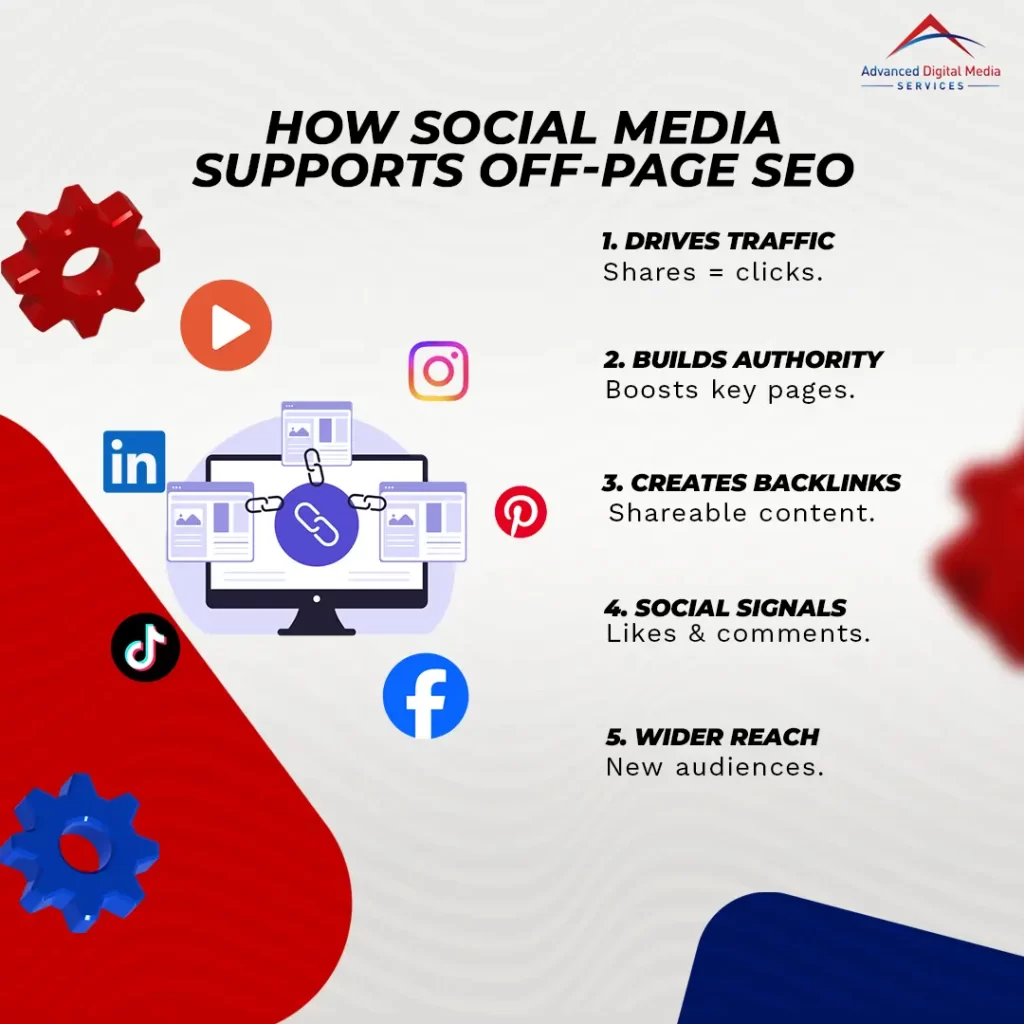
Social media plays an essential role in off-page SEO by driving traffic through shares, likes, and engagement. These interactions not only increase your visibility but can also serve as social signals that Google considers when ranking your site. So, understanding how to leverage social media effectively is key to enhancing your overall SEO strategy.
Driving traffic through shares, likes, and engagement
Engaging with your audience on social media can considerably enhance your off-page SEO efforts. By driving traffic via social channels, you not only boost visibility but also create meaningful interactions. Here are four ways to achieve this:
- Create shareable content: Craft posts that resonate and encourage shares.
- Encourage likes and comments: Ask questions or create polls to spark engagement.
- Leverage influencers: Collaborate with influencers who can amplify your message.
- Utilize hashtags: Use relevant hashtags to reach a broader audience.
Social signals as indirect ranking factors for Google
While it may not be a direct ranking factor, social signals can greatly influence your website’s visibility and authority in Google’s eyes. When your content receives shares, likes, and comments, it generates engagement metrics that signal to search engines that your content is valuable. Although Google doesn’t officially confirm social signals as indirect ranking factors, there’s a strong correlation between high social engagement and improved SEO value. When people interact with your posts, it can lead to increased traffic and backlinks, enhancing your site’s credibility. So, fostering a robust social media presence isn’t just about building a community; it’s also a strategic move to boost your website’s performance in search results.
How Social Media Boosts Brand Authority and Visibility
Social media is a powerful tool for boosting your brand’s authority and visibility. By actively engaging with your audience, you build trust and create meaningful connections that extend your reach. This not only helps you connect with wider audiences but also establishes your brand as a credible source in your industry.
Building trust through active social engagement
When you actively engage with your audience on social media, you not only foster a sense of community but also build trust in your brand. This trust is essential for building brand authority with social media. Here are four ways to enhance that trust through social engagement:
- Respond promptly to comments and messages, showing you value their input.
- Share user-generated content, highlighting your audience’s experiences with your brand.
- Provide valuable information and insights, positioning yourself as an expert in your field.
- Be transparent about your brand’s values and practices, creating an authentic connection.
Expanding reach by connecting with wider audiences
Connecting with a wider audience on social media can greatly enhance your brand’s authority and visibility. By sharing valuable content and engaging with followers, you’re not just building relationships; you’re also amplifying your reach. The role of social media in SEO is essential, as it helps you connect with potential customers who might not find you through traditional search methods. As your audience grows, so does the likelihood of earning backlinks and social shares, which can considerably boost your search rankings. Plus, the more people interact with your brand, the stronger your reputation becomes. Ultimately, leveraging social media effectively can help position your brand as an industry leader, attracting even more visibility and credibility in the digital landscape.
Best Practices for Using Social Media in SEO Strategy
To effectively use social media in your SEO strategy, focus on creating shareable content that naturally attracts backlinks. You should also leverage multiple platforms to maximize your exposure and reach a broader audience. Finally, don’t forget to monitor your analytics to see how your efforts impact traffic and search rankings.
Creating shareable content that encourages backlinks
Creating shareable content that encourages backlinks is essential for enhancing your SEO strategy, especially in today’s digital landscape. To create this type of content effectively, consider these best practices:
- Know Your Audience: Understand what topics resonate with your target demographic and tailor your content accordingly.
- Use Visuals: Incorporate eye-catching images, infographics, or videos to make your content more engaging and shareable.
- Craft Compelling Headlines: A fascinating headline can grab attention and increase the likelihood of shares and backlinks.
- Encourage User Interaction: Ask questions or include polls to foster engagement, prompting readers to share your content with their networks.
Leveraging multiple platforms for maximum exposure
While social media might seem like a separate entity from your SEO efforts, leveraging multiple platforms can greatly enhance your online visibility. By diversifying your presence across platforms like Facebook, Twitter, Instagram, and LinkedIn, you can reach different audiences and boost engagement. Each platform has unique features that can showcase your brand’s personality, making your content more relatable. Don’t forget to incorporate social bookmarking in off-page SEO; this strategy can drive traffic and improve your site’s authority. Share your blog posts, infographics, and videos across these channels, encouraging followers to engage and share. The more you share, the greater the chance of attracting backlinks, ultimately enhancing your SEO strategy and growing your online presence.
Monitoring analytics to measure impact on traffic and rankings
Effective monitoring of analytics is essential for understanding how your social media efforts impact website traffic and search rankings. By tracking relevant metrics, you can enhance your SEO strategy. Here are four key practices:
- Analyze Traffic Sources: Identify which social media platforms drive the most visitors to your site.
- Track Engagement Rates: Monitor likes, shares, and comments to gauge brand mentions and SEO relevance.
- Evaluate Conversion Metrics: Assess how social media influences lead generation and sales.
- Monitor Keyword Performance: Keep an eye on search rankings for targeted keywords related to your brand.
Strengthen Your SEO Strategy with ADMS
If you want to elevate your SEO strategy, integrating social media with expert help from ADMS can make a big difference. They tailor digital marketing strategies to fit your unique business needs, ensuring long-term success. Reach out to ADMS today, and start growing your online presence while outranking your competitors.
Expert integration of social media and SEO for long-term success
Integrating social media into your SEO strategy isn’t just smart—it’s essential for long-term success. When you leverage social platforms, you enhance your content sharing for SEO benefits, which can greatly boost your visibility. Here are four ways to effectively combine social media and SEO:
- Create shareable content: Develop engaging posts that encourage users to share, increasing reach.
- Optimize social profiles: Confirm your profiles are keyword-rich and linked to your website for better discoverability.
- Encourage audience interaction: Engage with your followers to foster community and increase content sharing.
- Track analytics: Use insights from both platforms to refine your strategies and identify what works.
Customized digital marketing strategies for your business
Building on the synergy between social media and SEO, customizing your digital marketing strategies can greatly enhance your online presence. By tailoring your approach, you can effectively leverage backlinks from social media sites to boost your website’s authority and search engine rankings. Consider your target audience and the platforms they frequent, ensuring your content resonates with them. Engaging posts and shareable graphics can drive traffic to your site while fostering brand loyalty. Implementing tailored campaigns allows you to measure success and adjust strategies as needed. With a focused plan, you’ll not only improve your visibility but also connect with potential customers more effectively. Remember, a customized strategy is key to standing out in today’s competitive digital landscape.
Contact ADMS today to grow your online presence and outrank competitors
Ready to elevate your online presence? Contact ADMS today and let’s work together to outrank your competitors! Our tailored strategies can boost your visibility through various channels. Here’s how we can help:
- Influencer Marketing for Off-Page SEO: Leverage partnerships to expand your reach.
- Social Media Engagement: Connect with your audience and drive traffic.
- Content Creation: Develop compelling content that resonates with users.
- Analytics Monitoring: Track performance and adjust strategies for best results.
With our expertise, you’ll not only grow your brand but also establish credibility in your industry. Don’t wait—reach out to ADMS and start seeing real results in your online visibility today!
Frequently Asked Questions
How Does Social Media Influence Search Engine Rankings?
Social media influences search engine rankings by driving traffic, increasing brand visibility, and generating backlinks. When you engage with your audience, it enhances your online presence, leading to improved search rankings over time.
Can Social Media Directly Impact Website Traffic?
Absolutely, social media can drive significant website traffic. When you engage your audience with compelling content, it creates buzz, encouraging shares and visits. The more you connect, the more traffic your site’s likely to see.
What Social Media Platforms Are Best for SEO?
For SEO, platforms like Facebook, Twitter, LinkedIn, and Instagram are best. They help you engage with your audience, drive traffic to your site, and boost visibility, enhancing your overall online presence and search rankings.
How Often Should I Post on Social Media for SEO Benefits?
Think of social media like a garden; regular posts nurture your brand’s growth. Aim for 3-5 times a week to keep your audience engaged, boost visibility, and reap those SEO benefits over time.
Is User Engagement on Social Media a Ranking Factor?
Yes, user engagement on social media can influence ranking factors. When you interact with your audience, it boosts brand visibility and drives traffic to your site, indirectly benefiting your SEO efforts.
Conclusion
Incorporating social media into your off-page SEO strategy is like planting seeds in a garden; with the right care, they’ll grow and flourish. By leveraging these platforms, you can enhance your brand’s visibility, drive traffic, and establish authority in your industry. Remember, the more you engage and share content, the more opportunities you’ll create for connections and backlinks. So, immerse yourself in social media and watch your online presence bloom like never before!