Internal linking is important for SEO because it helps visitors easily move around your website, keeps them on your pages longer, and shows Google how your site is organized. These links spread authority from one page to another, which can boost rankings and make your content more visible in search results. In short, internal links make your site easier to use and help it perform better online.
Key Takeaways
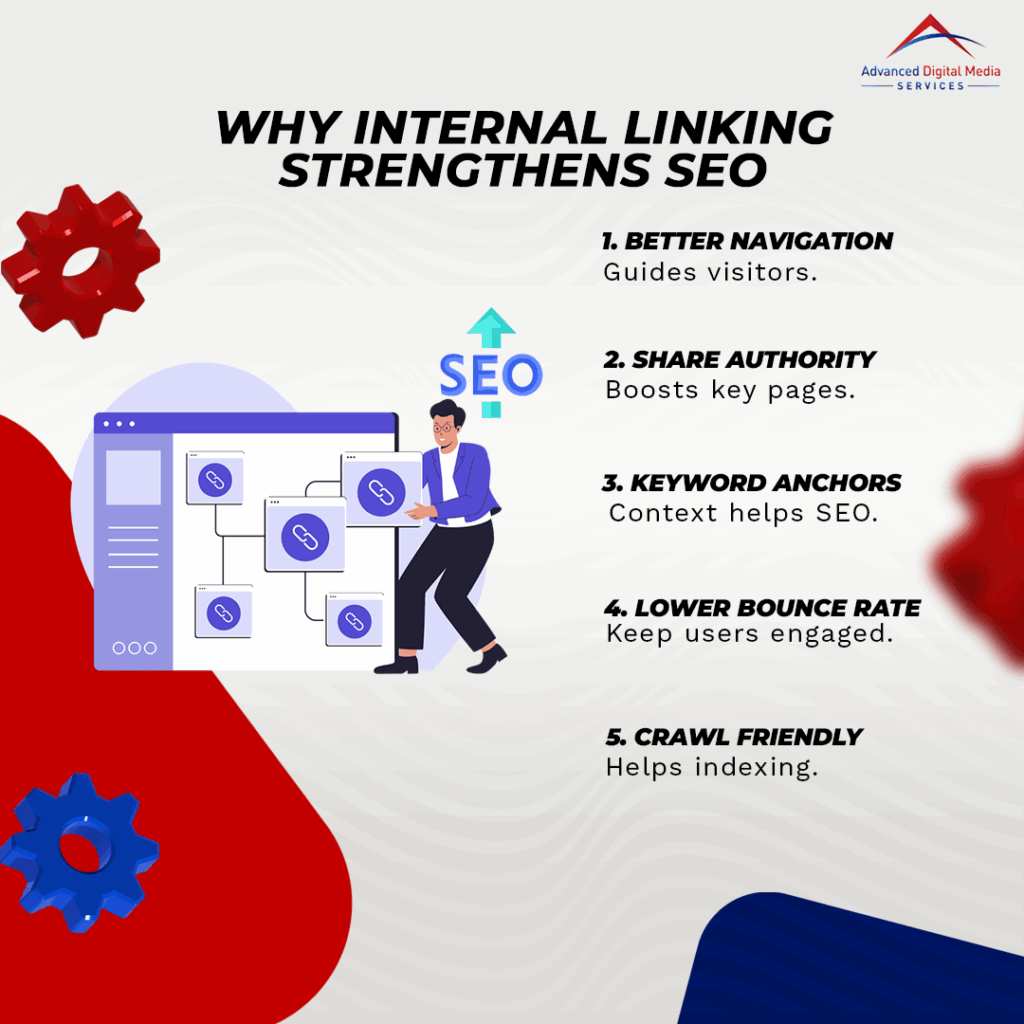
- Internal linking enhances site navigation, improving user experience and encouraging longer visits, which positively influences SEO rankings.
- It helps distribute page authority across the site, aiding search engines in effectively crawling and indexing content.
- Descriptive anchor texts provide contextual relevance, supporting keyword strategies and improving linked pages’ visibility in search results.
- A well-structured internal linking strategy reduces bounce rates by guiding users to related content, increasing engagement and retention.
- Regular audits can identify internal linking opportunities, ensuring a cohesive site structure and enhancing overall SEO performance.
What Is Internal Linking in SEO?
Internal linking is all about connecting different pages on your website to each other, which helps both users and search engines navigate your content. Unlike external links that point to other websites, internal links keep visitors engaged with your site and enhance your SEO efforts. Understanding this difference is key to building a strong internal linking strategy.
The difference between internal and external links
While many people focus on external links when thinking about SEO, internal linking plays an essential role in enhancing your website’s structure and user experience. Internal links connect pages within your site, guiding visitors to related content and helping search engines understand your site’s hierarchy. On the other hand, external links direct users to different websites, which can build authority but don’t contribute to your own site’s navigation.
When considering internal links vs external links, remember that both types serve distinct purposes. Internal links improve engagement and keep users on your site longer, while external links can enhance credibility. Balancing both strategies is vital for a well-rounded SEO approach that maximizes your online potential.
How internal links connect pages within your website
When you think about optimizing your website for SEO, understanding how internal linking works is essential. Internal links connect different pages within your site, creating a network that helps both users and search engines navigate your content. An effective internal linking strategy for websites not only improves user experience but also distributes page authority across your site. This means that when one page gains links and authority, other linked pages can benefit, boosting their visibility in search results. By strategically placing internal links, you guide visitors to related content and keep them engaged longer, which can reduce bounce rates. Ultimately, a well-structured internal linking system enhances your site’s overall SEO performance and helps search engines index your pages more efficiently.
How Internal Links Improve User Experience
Internal links make it easier for you to find relevant content on a website, streamlining your navigation experience. By guiding visitors through related topics, these links can keep you engaged longer and encourage exploration. A well-planned internal linking system significantly improves your overall website experience.
Guiding visitors to relevant content easily
Effective navigation is essential for keeping visitors engaged on your website, and internal links play a significant role in guiding them to relevant content. By strategically placing internal links, you enhance user navigation, making it easy for visitors to find additional information related to their interests. When users can quickly jump to relevant articles or sections, it improves their overall experience and keeps them on your site longer. This not only satisfies your audience but also signals to search engines that your content is interconnected and valuable, which can positively impact your SEO. Ultimately, effective internal linking creates a seamless flow of information, ensuring visitors can explore your site effortlessly and find what they’re looking for.
Increasing time spent on the site through logical navigation
By enhancing user navigation, logical internal linking not only keeps visitors engaged but also encourages them to spend more time on your site. When users find it easy to explore related content, they’re more likely to click on multiple links, leading to increased time spent on the site through logical navigation. This seamless experience helps them discover valuable information, which can enhance their overall satisfaction. Additionally, effective internal links contribute to reducing bounce rate, as visitors who find relevant content are less likely to leave your site quickly. Ultimately, a well-structured internal linking strategy not only improves user experience but also supports your SEO efforts by signaling to search engines that your site offers valuable and interconnected content.
The SEO Benefits of Internal Linking
When you use internal linking effectively, you’re not just enhancing navigation; you’re also boosting your site’s SEO. By distributing link equity and helping search engines crawl your content, you create a more optimized online presence. Plus, using contextual anchors supports your keyword strategies, making it easier for your audience to find what they need.
Distributing page authority (link equity) across your site
Although it might seem subtle, internal linking plays an essential role in distributing page authority, or link equity, across your website. By strategically placing internal links, you’re passing link equity through internal links to pages that need a boost. This process helps search engines recognize the importance of certain content, enhancing their visibility in search results. When you link to your high-authority pages, you effectively share that authority with other relevant pages, making them more competitive. This not only improves your site’s overall SEO performance but also encourages users to explore more of your content. Ultimately, a well-structured internal linking strategy can lead to better rankings and increased organic traffic, benefiting your entire site.
Helping search engines crawl and index content effectively
A well-structured internal linking strategy not only helps distribute link equity but also greatly aids search engines in crawling and indexing your site’s content. By creating a logical flow of links, you enhance the crawlability of your website, allowing search engines to discover and understand your pages more efficiently. When search engines can easily navigate your site, they can index your content accurately, leading to better rankings. Internal links provide context and relevance to related content, making it easier for search engines to evaluate the importance of your pages. This means a well-implemented internal linking strategy not only boosts your SEO efforts but also guarantees that your valuable content doesn’t go unnoticed.
Supporting keyword strategies with contextual anchors
To effectively support your keyword strategies, utilizing contextual anchors in your internal linking can make a significant difference in how search engines perceive your content. By embedding relevant keywords within your anchor text, you’re signaling to search engines what your linked page is about, enhancing its relevance. This practice not only improves your site’s SEO value of contextual links but also provides users with a better understanding of the content they can expect. When done right, supporting keyword strategies with contextual anchors helps create a cohesive internal linking structure that guides visitors through your site, ultimately improving user experience and boosting your search rankings. Prioritize contextually rich anchors, and watch your SEO efforts yield better results.
Best Practices for Effective Internal Linking
When it comes to effective internal linking, you want to focus on a few key practices. Using natural anchor text instead of cramming in keywords can make your links more user-friendly. Plus, prioritizing links to your cornerstone pages while avoiding overlinking will help maintain your site’s SEO value.
Using natural anchor text instead of keyword stuffing
Using natural anchor text is essential for effective internal linking, as it not only enhances user experience but also improves SEO performance. When you use descriptive and relevant phrases, visitors can easily understand what to expect when they click a link. Avoid keyword stuffing, which can lead to a poor user experience and might penalize your site in search rankings. Instead, focus on internal link structure optimization by integrating varied, contextually appropriate anchor texts. This approach not only aids in guiding users through your content but also helps search engines decipher your site’s structure. Remember, the goal is to create a seamless navigation experience that encourages engagement and drives traffic to your most valuable pages.
Prioritizing links to cornerstone and high-value pages
Prioritizing links to cornerstone and high-value pages is essential for maximizing your site’s SEO potential. These pages are often the most important, showcasing your expertise and driving conversions. By focusing on them, you create a clear content hierarchy that helps search engines understand which pages matter most. When linking, make sure to direct users to these key areas, enhancing their experience and guiding them through your site. This not only improves your visibility in search results but also boosts user engagement. Remember, effective linking isn’t just about quantity; it’s about quality. So, always prioritize links to cornerstone and high-value pages, ensuring your internal linking strategy aligns with your overall SEO goals.
Avoiding overlinking that can dilute SEO value
While it might be tempting to include numerous internal links throughout your content, overlinking can actually dilute your SEO value. When you stuff your pages with too many links, it can confuse search engines about which pages are most important. Instead of maximizing the benefits of internal links for ranking, you might end up harming your site’s authority. Aim for quality over quantity—select relevant links that truly enhance the user experience. A good rule of thumb is to link to a few key pages per article, ensuring each link serves a clear purpose. This strategy not only maintains your SEO strength but also keeps your readers engaged and improves navigation on your site.
Strengthen Your SEO Strategy with ADMS
If you’re looking to enhance your SEO strategy, partnering with Advanced Digital Media Services can make a big difference. They offer expert site audits to pinpoint internal linking opportunities and proven strategies that boost both rankings and user engagement. Contact ADMS today to optimize your website and elevate your search visibility.
Expert site audits to identify internal linking opportunities
To enhance your SEO strategy, conducting expert site audits is essential for uncovering valuable internal linking opportunities. These audits help identify which pages are performing well and which need a boost. By analyzing your content structure, you can find ideal spots for interlinking blog posts for traffic, guiding visitors through your site and improving user experience. This strategy not only keeps users engaged but also signals to search engines the relevance of your content. Furthermore, internal links distribute page authority, helping lesser-known pages gain visibility. Remember, a well-structured internal linking strategy can greatly impact your overall SEO performance, making it a crucial component of your digital marketing efforts. Don’t overlook the power of your internal links!
Proven strategies that improve rankings and user engagement
Building on the insights gained from expert site audits, implementing proven strategies can greatly enhance your SEO performance and user engagement. Start by focusing on anchor text best practices; use descriptive, keyword-rich phrases that clearly indicate the linked page’s content. This not only helps search engines understand your site structure but also improves the user experience. Additionally, guarantee your internal links are placed contextually within relevant content, guiding users naturally from one topic to another. Regularly audit your internal linking strategy to identify any broken links or opportunities for enhancement. By consistently applying these strategies, you’ll create a more intuitive navigation experience that keeps visitors engaged and boosts your rankings in search results.
Contact ADMS today to optimize your website and boost your search visibility
Release your website’s full potential by partnering with Advanced Digital Media Services (ADMS). With our expert team, you’ll optimize your site and boost your search visibility effectively. We recognize the importance of page authority distribution and how strategic internal linking can elevate your rankings. By connecting relevant content, we enhance user experience and guarantee that search engines recognize your site’s value. Our tailored SEO strategies focus on your unique needs, driving more organic traffic and improving lead conversions. Don’t let your website’s potential go untapped. Contact ADMS today to start your journey towards higher search rankings and increased online presence. Together, we’ll create a powerful SEO strategy that delivers lasting results and elevates your brand.
Frequently Asked Questions
How Do Internal Links Affect Page Authority and Ranking?
Internal links boost page authority and ranking by distributing link equity throughout your site. They help search engines understand content hierarchy, improving crawlability and user experience, which ultimately enhances your site’s visibility and performance.
Can Too Many Internal Links Harm My SEO?
Studies show that pages with excessive internal links can dilute authority, potentially harming SEO. You should aim for a balanced approach, ensuring each link serves a purpose without overwhelming users or search engines with choices.
Should I Use Exact Match Anchor Text for Internal Links?
You shouldn’t overuse exact match anchor text for internal links. While it can help with relevance, varied anchor text creates a more natural reading experience and prevents search engines from viewing your site as spammy.
How Often Should I Update Internal Links on My Site?
Think of internal links as the veins of your website’s body. You should update them regularly—every few months or whenever content changes—to guarantee your site’s health and flow of information remains strong and effective.
Do Internal Links Help With Mobile SEO Performance?
Yes, internal links can greatly enhance your mobile SEO performance. They help search engines understand your site’s structure, improve user navigation, and keep visitors engaged longer, all essential for optimizing your mobile user experience.
Conclusion
Incorporating internal links isn’t just about boosting SEO; it’s about enhancing navigation, enriching user experience, and empowering your content strategy. By connecting relevant pages, you guide readers, keep them engaged, and help search engines understand your site’s structure. So, take the time to implement effective internal linking—link to related articles, link to important pages, and link to valuable resources. With these strategies in place, you’ll not only improve your rankings but also create a more cohesive and user-friendly site.