During an SEO audit, you can easily overlook critical mistakes that hurt your site’s performance. Don’t neglect technical issues like slow site speed or crawl errors, as they frustrate users. It’s crucial to optimize on-page elements like title tags and metadata. Also, consider user experience—high bounce rates can signal problems. Finally, make certain you’re using current tools for accurate data. Tracking actionable fixes is essential for ongoing improvement. Stick around to uncover more common pitfalls.
Key Takeaways
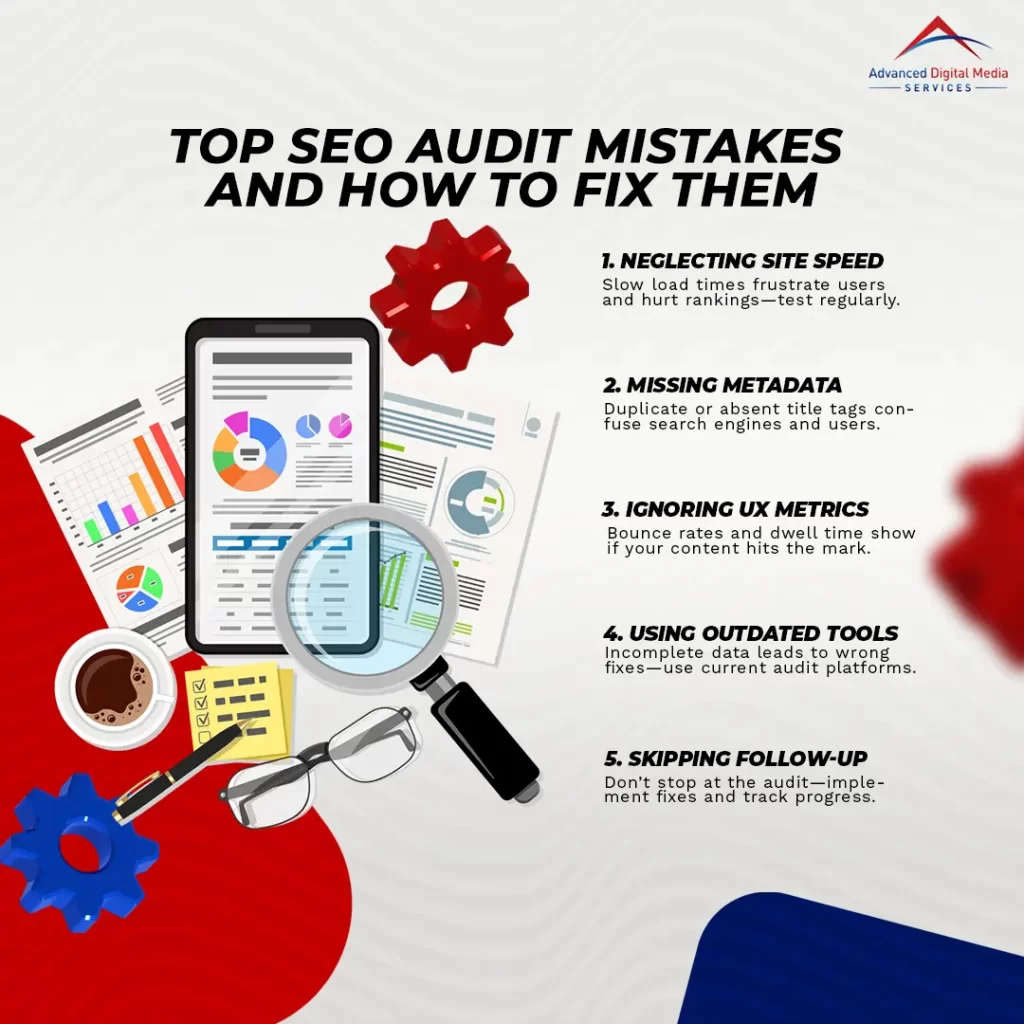
- Overlooking technical SEO issues like site speed and mobile responsiveness can lead to high bounce rates and poor user experience.
- Failing to optimize on-page elements such as title tags and meta descriptions can confuse search engines and harm your rankings.
- Ignoring user experience metrics, such as bounce rates and dwell time, can indicate that content isn’t meeting visitor expectations.
- Using outdated tools and incomplete data may result in inaccurate SEO audits, masking critical on-page issues needing attention.
- Neglecting to prioritize actionable fixes and monitor changes can undermine SEO efforts and lead to lost opportunities for improvement.
Overlooking Technical SEO Issues
When you’re conducting an SEO audit, it’s easy to overlook critical technical issues like site speed and mobile responsiveness. These factors can greatly impact your site’s performance and user experience. Additionally, failing to catch crawl errors and broken links can hinder your SEO efforts and drive potential customers away.
Ignoring Site Speed and Mobile Responsiveness
While you might be focused on content and keywords, ignoring site speed and mobile responsiveness can greatly hinder your SEO efforts. A slow website speed frustrates users, leading them to bounce away, which negatively impacts your rankings. Google prioritizes fast-loading sites, so if yours lags, you’re likely losing valuable traffic.
Additionally, poor mobile optimization can alienate a growing segment of users who browse on their phones. If your site isn’t mobile-friendly, you risk driving potential customers away and missing out on conversions. It’s essential to regularly test your site’s speed and guarantee it’s optimized for mobile devices. By addressing these technical issues, you can markedly enhance user experience and improve your overall SEO performance. Don’t overlook this critical aspect!
Failing to Detect Crawl Errors and Broken Links
Even if you’ve got great content and a solid keyword strategy, failing to detect crawl errors and broken links can seriously undermine your SEO efforts. Broken links in audits can frustrate users and search engines alike, leading to lower rankings and a poor user experience.
Here are a few reasons why you shouldn’t overlook these issues:
- User Frustration: Broken links can lead visitors to dead ends, driving them away from your site.
- Crawl Issues: Search engines may struggle to index your site properly if they encounter errors.
- Lost Authority: Frequent broken links can impact your site’s credibility and authority in the eyes of search engines.
Make sure to regularly check for these issues to maintain a healthy website and boost your SEO performance!
Neglecting On-Page Optimization Details
When you’re auditing your site, it’s easy to overlook the finer points of on-page optimization. Missing or duplicate title tags, meta descriptions, and improper use of header tags can seriously impact your search visibility. Paying attention to these details can make a significant difference in how well your content performs.
Missing or Duplicate Title Tags and Meta Descriptions
A critical aspect of on-page optimization is ensuring that every page on your website has unique title tags and meta descriptions. Missing meta tags or having duplicates can confuse search engines and harm your rankings. Here’s what you should avoid:
- Missing Meta Tags: Not having title tags or meta descriptions can lead to lost traffic.
- Duplicate Tags: Using the same title tag or description across multiple pages dilutes your SEO efforts.
- Irrelevant Content: Title tags and meta descriptions should accurately reflect the page content; otherwise, users may bounce.
Poor Use of Header Tags and Keyword Placement
While unique title tags and meta descriptions lay the groundwork for effective on-page SEO, the proper use of header tags and strategic keyword placement further strengthens your website’s optimization. A common mistake is the poor use of header tags. They should structure your content logically and incorporate relevant keywords. Ignoring this can confuse search engines and users alike. Additionally, improper keyword usage can hurt your rankings. Keywords need to be placed naturally within your content, including headers, to signal relevance. Overstuffing or misplacing them can lead to penalties from search engines. By focusing on correct header tags and thoughtful keyword placement, you can greatly enhance your site’s SEO performance and guarantee a better user experience.
Failing to Analyze User Experience and Engagement
When you’re auditing your site, it’s easy to overlook user experience and engagement metrics. Not analyzing bounce rates, dwell time, and the effectiveness of your site navigation can lead to missed opportunities for improvement. These factors are essential in keeping visitors engaged and guiding them through your content effectively.
Not Evaluating Bounce Rates and Dwell Time
User engagement metrics like bounce rates and dwell time are essential indicators of how well your website resonates with visitors. If you’re not evaluating bounce rates and dwell time, you might miss vital insights into user behavior. Ignoring analytics data can lead to misguided strategies and hinder your site’s performance.
Consider these key points:
- High bounce rates could signal that your content isn’t meeting visitor expectations.
- Low dwell time might indicate that users aren’t finding what they need or are quickly losing interest.
- Improving these metrics can enhance user experience, leading to better engagement and conversions.
Overlooking Site Navigation and Internal Linking
Ignoring site navigation and internal linking can severely impact user experience and engagement on your website. When users struggle to find what they need, they’ll likely leave, increasing your bounce rate. This is where technical SEO errors come into play; poor navigation and weak internal linking can hinder crawlers from indexing your content effectively. Make sure your site’s structure is intuitive, guiding visitors seamlessly from one page to another. Utilize descriptive anchor texts for internal links to enhance clarity and relevance. By prioritizing effective navigation and robust internal linking, you not only improve user experience but also boost your SEO performance. Don’t overlook this essential aspect of your audit—it can make a significant difference in retaining visitors and improving your rankings.
Using Outdated or Incomplete Tools and Data
When you’re conducting an SEO audit, relying on outdated or incomplete tools can lead to inaccurate reports that misguide your strategy. It’s essential to integrate data from Google Search Console and Analytics for a thorough view of your site’s performance. Without this updated information, you might miss key insights that could improve your results.
Relying on Inaccurate Audit Reports
Although you may think you’re getting an extensive view of your website’s performance, relying on outdated or incomplete tools and data can lead to significant missteps in your SEO audit. Inaccurate reports can mask critical on-page SEO issues, preventing you from making the necessary improvements.
Consider these factors when evaluating your audit reports:
- Tool Accuracy: Verify your tools are up-to-date and reliable.
- Data Completeness: Use thorough data sources to avoid oversight.
- Report Interpretation: Misinterpretation can lead to misguided strategies.
Not Integrating Data from Google Search Console and Analytics
Integrating data from Google Search Console and Analytics is crucial for a detailed SEO audit, as these tools provide invaluable insights into your website’s performance. Without this integration, you might miss critical data, including indexing issues that could be hindering your search rankings. Google Search Console helps identify crawl errors and indexing problems, while Analytics tracks user behavior and engagement metrics. If you rely solely on outdated tools or incomplete data, you won’t get a full picture of your site’s health. This oversight can lead to misguided strategies that fail to address underlying issues. To optimize your SEO efforts, make sure you’re leveraging both platforms effectively to gain a thorough understanding of your website’s performance.
Not Following Through with Actionable Fixes
When you identify issues during your SEO audit, it’s essential to prioritize them and take action. Skipping this step can lead to missed opportunities for improvement, and without monitoring the results, you won’t know if your fixes are effective. Staying proactive in implementing and evaluating changes is key to maximizing your SEO efforts.
Skipping Prioritization of Identified Issues
Failing to prioritize the issues identified during an SEO audit can lead to missed opportunities for improvement. When you skip prioritization of identified issues, you might overlook critical areas that could boost your site’s performance.
Consider focusing on these key areas first:
- High-impact technical errors: Address issues like broken links or slow loading times.
- Duplicate content problems: Tackle these to avoid penalties and improve your site’s ranking.
- On-page SEO elements: Optimize title tags and meta descriptions for better visibility.
Failing to Monitor Improvements After Implementation
After addressing the high-impact issues identified in your SEO audit, it’s important to keep the momentum going by monitoring the improvements made. Without consistent tracking, you might miss out on valuable insights that could further enhance your site’s performance. For instance, if you’ve corrected a missing XML sitemap, you need to verify that it’s effectively submitted to search engines and being crawled properly. This guarantees search engines can index your pages efficiently. Regularly checking your site’s analytics will help you spot trends and adjustments needed. If you neglect to monitor these changes, you could risk losing traction, undermining the hard work you’ve put into your SEO strategy. Don’t skip this essential step!
Frequently Asked Questions
What Is the Importance of Keyword Research in SEO Audits?
Keyword research’s essential in SEO audits because it helps you identify what your audience is searching for. It guides your content strategy, ensuring you’re targeting the right terms to improve visibility and drive organic traffic.
How Often Should SEO Audits Be Conducted?
You should conduct SEO audits at least quarterly to stay ahead of algorithm changes and track your website’s performance. Regular audits help identify areas for improvement, ensuring your online presence remains strong and competitive.
What Are Common Signs of Poor Website Performance?
When your website’s like a car sputtering on empty, signs of poor performance include slow loading times, high bounce rates, and low engagement. If users aren’t sticking around, it’s time to reassess your strategy.
Can SEO Audits Improve Website Load Speed?
Yes, SEO audits can improve your website’s load speed. By identifying technical issues, optimizing images, and streamlining code, you can enhance performance, leading to a better user experience and higher search engine rankings.
How Does Mobile Optimization Affect SEO Rankings?
Mobile optimization greatly affects your SEO rankings because search engines prioritize mobile-friendly sites. If your website isn’t optimized for mobile, you risk losing visibility, traffic, and potential conversions, which can ultimately hinder your business growth.
Conclusion
In your quest for SEO perfection, it’s easy to trip over the very basics—like forgetting to check for broken links while polishing your homepage. It’s almost poetic, really, how the smallest oversight can turn your well-crafted masterpiece into a digital ghost town. So, as you commence on your auditing journey, remember: the road to increased traffic isn’t paved with good intentions but with meticulous attention to detail. Don’t let irony be the only thing driving your SEO strategy!