When it comes to link building, focus on quality. Seek high-quality, relevant backlinks from reputable sites to boost your authority. Build relationships with industry websites and share valuable content. However, avoid buying links or participating in link schemes, as these can damage your reputation. Regularly audit your backlink profile to identify any toxic links. Stick around to discover best practices for a sustainable link building strategy that can further enhance your SEO efforts!
Key Takeaways
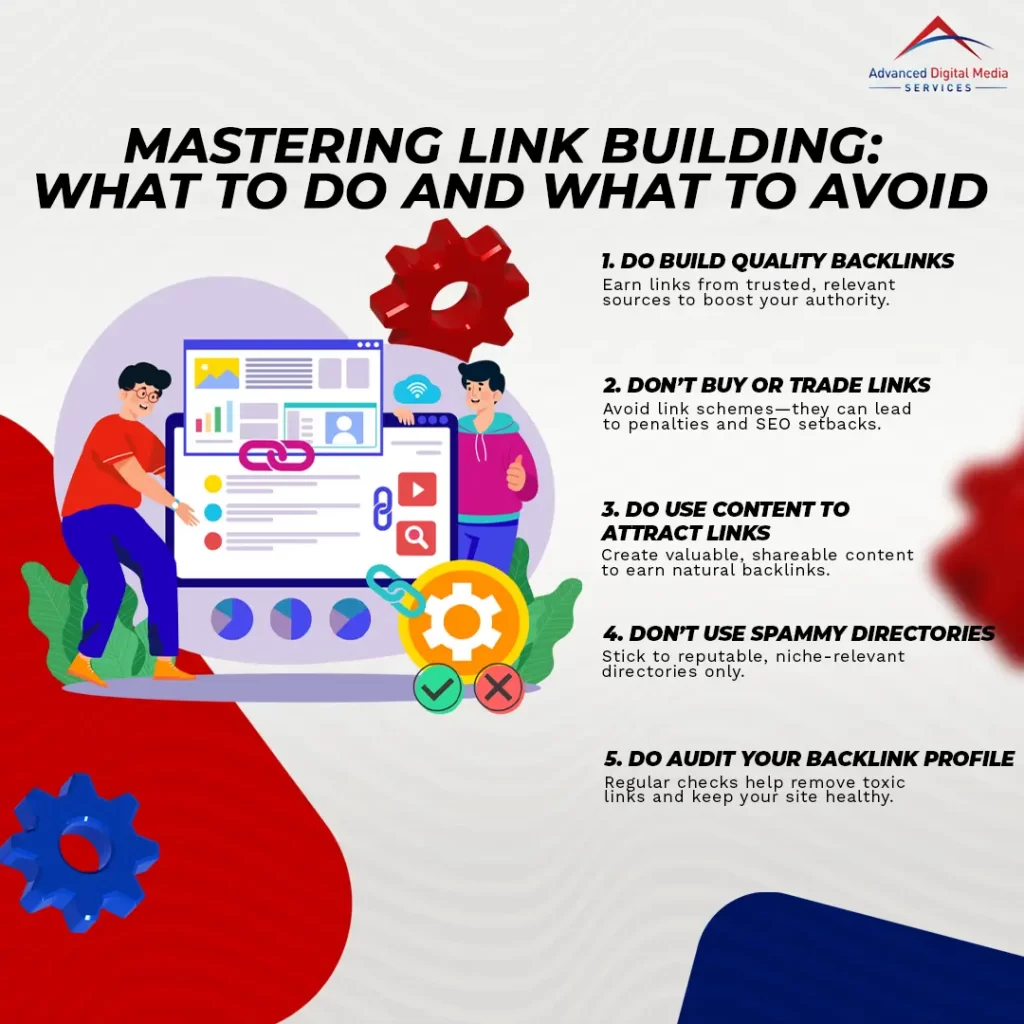
- Do focus on high-quality, relevant backlinks from reputable sites to enhance your site’s authority and search rankings.
- Don’t buy links or participate in link schemes, as this can lead to penalties and damage your site’s reputation.
- Do engage with industry-related websites through social media and collaborations to build relationships and foster link-building opportunities.
- Don’t use irrelevant or low-quality directories that do not align with your niche, as they can harm your SEO efforts.
- Do regularly audit your backlink profile to identify and remove toxic links that could negatively impact your credibility and performance.
The Do’s of Effective Link Building
When it comes to effective link building, focusing on high-quality, relevant backlinks is key. You should also aim to build relationships with reputable websites to enhance your credibility. Plus, using content marketing can help attract those natural links that boost your site’s authority.
Focus on High-Quality, Relevant Backlinks
Focusing on high-quality, relevant backlinks is essential for any successful link-building strategy, as these links not only enhance your site’s authority but also improve its search engine ranking. When you pursue backlinks, prioritize those from reputable sources within your industry. These links signal to search engines that your content is trustworthy and valuable. Avoid low-quality or spammy sites; they can harm your site’s reputation and rankings. Instead, invest time in creating valuable content that naturally attracts backlinks. Engage with niche-related websites, blogs, and forums to increase your chances of earning quality links. By implementing these link-building strategies, you’ll strengthen your online presence and drive more targeted traffic to your site. Quality truly outweighs quantity in the world of backlinks.
Build Relationships with Reputable Websites
Building relationships with reputable websites is a key strategy in effective link building. When you connect with trustworthy sites, you increase your chances of earning high-quality backlinks that can greatly boost your SEO efforts. Here are some ways to foster those relationships:
- Engage on Social Media: Share their content, comment thoughtfully, and join conversations to build rapport.
- Collaborate on Content: Propose guest posts, interviews, or joint projects that provide value to both audiences.
- Provide Value: Offer insights, resources, or tools that can help them, making it clear that you’re invested in a mutually beneficial relationship.
Use Content Marketing to Attract Natural Links
To attract natural links effectively, leveraging content marketing is essential, as it not only creates valuable resources for your audience but also encourages others to link back to your site. By producing high-quality, informative content, you answer key questions like “how does link building work?” and establish yourself as an authority in your niche. Think about creating blog posts, infographics, or videos that resonate with your target audience. When your content is engaging and shareable, it naturally draws attention, prompting others to link to it. Don’t forget to promote your content on social media and relevant online communities to maximize its reach. Ultimately, great content makes link building easier and helps you forge meaningful connections within your industry.
Common Mistakes That Can Undermine Your Search Engine Optimization Plan
When building links, there are some serious pitfalls you need to avoid if you want your SEO strategy to succeed. Buying links or joining link schemes can lead to penalties, while using irrelevant directories or over-optimized anchor text can hurt your credibility. Let’s explore these missteps and how to steer clear of them.
Avoid Buying Links or Participating in Link Schemes
While it may be tempting to buy links or engage in link schemes for a quick boost in search rankings, doing so can severely damage your SEO strategy. Not only can it lead to penalties from search engines, but it can also harm your site’s credibility. Here are some guidelines to consider:
- Do focus on quality content** that naturally attracts backlinks.
- Don’t rely on shortcuts like paid links or link farms.
- Do build relationships with other reputable websites for organic link opportunities.
Don’t Use Irrelevant or Low-Quality Directories
Using irrelevant or low-quality directories can seriously undermine your SEO efforts, as they often fail to provide any real value to your site. A crucial aspect of successful link building is choosing the right platforms to showcase your business. When you choose directories that don’t align with your niche or have a poor reputation, it can lead to penalties from search engines. Instead, focus on reputable, relevant directories that cater to your audience. Quality over quantity is essential here; a few high-quality links can boost your SEO far more than numerous low-quality listings. Remember, every link reflects on your brand, so choose wisely to enhance your online presence.
Stay Away from Over-Optimized Anchor Text
Over-optimized anchor text can be detrimental to your SEO strategy, even if it might seem like a good idea at first. You might think using exact match keywords will boost your rankings, but it can actually hurt your credibility. Google’s algorithms prefer natural language and variety in anchor text.
Here’s what to avoid:
- Exact Match Overuse: Relying solely on target keywords can raise red flags.
- Irrelevant Context: Make sure your anchor text fits the surrounding content.
- Ignoring Brand Names: Include your brand name to build recognition and trust.
Best Practices for a Sustainable Link Building Strategy
To build a sustainable link building strategy, you need to audit regularly and monitor your backlink profile. This helps you identify any issues and guarantees you’re on the right track. Additionally, diversifying your link sources can set you up for long-term success.
Audit and Monitor Your Backlink Profile Regularly
While building a robust backlink profile is crucial for improving your site’s search rankings, regularly auditing and monitoring these links is equally important for sustaining your SEO efforts. By doing so, you can guarantee that your link building strategy remains effective and compliant with search engine guidelines.
Here are the key steps to reflect on:
- Identify toxic links that could harm your site’s credibility.
- Evaluate link quality to confirm that they align with what link building means for your brand.
- Track changes in your backlink profile to adjust your strategy accordingly.
Make it a habit to audit and monitor your backlink profile regularly, as this will help you maintain a healthy online presence and maximize your SEO potential.
Diversify Your Link Sources for Long-Term Success
Diversifying your link sources is essential for building a sustainable link building strategy that stands the test of time. Relying on a single source can lead to vulnerability, especially if search engine algorithms change. Are backlinks still an effective SEO strategy? Absolutely, but only if you incorporate links from various reputable sources. Aim for a mix of guest posts, partnerships, and social media mentions, while also considering niche-specific directories. This approach not only enhances your website’s authority but also protects you from sudden traffic drops. Remember that quality always trumps quantity, so seek high-value links that truly resonate with your audience. By diversifying, you’ll create a robust backlink profile that supports your long-term SEO goals.
How Link Building Supports Overall SEO Goals
Link building plays an essential role in achieving your overall SEO goals. Improving your domain authority and search visibility helps your site rank higher in search results. Plus, it drives referral traffic and enhances your brand’s credibility, making it a key component of a successful digital strategy.
Improving Domain Authority and Search Visibility
To improve your domain authority and search visibility, you can’t overlook the importance of a solid link-building strategy. Without quality links, your efforts may be in vain—after all, links don’t work if they’re not relevant or authoritative. Here are the key aspects to evaluate:
- Focus on Quality Over Quantity: Aim for links from reputable sites that resonate with your niche.
- Diversify Your Link Sources: Use a mix of guest posts, partnerships, and social media to create a robust link profile.
- Monitor and Adjust: Regularly assess your backlink profile to identify and remove harmful links that could hurt your authority.
Driving Referral Traffic and Strengthening Brand Credibility
While building links may seem like just another task on your SEO checklist, it plays a crucial role in driving referral traffic and enhancing your brand’s credibility. Quality backlinks from reputable sources act as endorsements, leading potential customers to your site. When users click on a link, they expect it to work; if the link doesn’t work, it can damage your reputation and deter traffic. Consistently securing valuable links not only boosts your site’s visibility but also positions your brand as an authority in your industry. Remember, each link is an opportunity to connect with new audiences, so focus on creating high-quality content that others want to share. By doing this, you’ll see a significant increase in both referral traffic and brand trust.
Frequently Asked Questions
How Long Does It Take to See Results From Link Building?
You can expect to see results from link building in three to six months. However, factors like your industry, competition, and overall strategy can influence the timeline for noticeable improvements in search rankings.
What Types of Links Are Considered High-Quality?
High-quality links come from authoritative, relevant websites within your industry. They should have strong domain authority, natural placement within the content, and be editorially approved. You’ll benefit most from links that enhance your credibility and visibility.
Can Social Media Links Boost My SEO?
Yes, social media links can boost your SEO. They drive traffic, increase brand visibility, and encourage engagement. While they’re not direct ranking factors, the exposure can lead to more backlinks and improved search performance.
Is Link Building Effective for Local SEO?
You might think link building’s just for big players, but it’s actually pivotal for local SEO too. Quality local links can elevate your visibility, driving traffic and engagement right within your community. Don’t underestimate it!
How Often Should I Update My Link Building Strategy?
You should regularly evaluate and update your link building strategy, ideally every few months. This guarantees you’re adapting to algorithm changes and industry trends, maximizing your site’s relevance and authority in search engine results.
Conclusion
Becoming proficient in the best and worst practices of link building can significantly enhance your website’s online presence. Did you know that websites with high-quality backlinks can see up to 14 times more organic traffic? By focusing on relevant, authoritative links and steering clear of spammy tactics, you’ll not only enhance your SEO strategy but also foster long-term growth. So, keep these best practices in mind, and watch your online presence flourish!