User intent is the reason behind a search query, and understanding it is essential for effective SEO. It helps you align your content with what users really want, driving more organic traffic to your site. By addressing user intent, you can improve your search rankings, reduce bounce rates, and boost engagement. It’s all about creating a better experience for your visitors. Discovering how to optimize your content based on user intent can lead to even greater success.
Key Takeaways
- The driving force behind a search query is user intent, which is crucial for guaranteeing that content aligns with user needs.
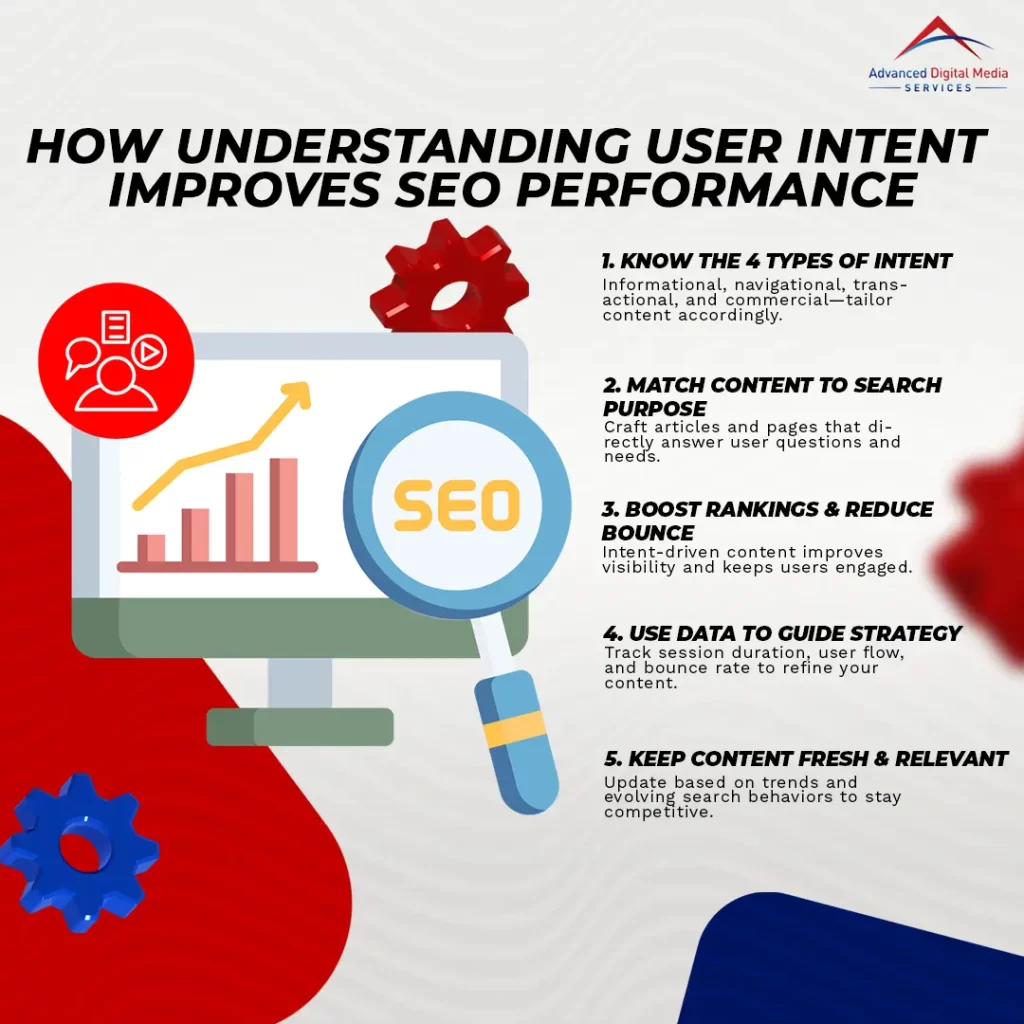
- It categorizes into informational, navigational, transactional, and commercial investigation intents, guiding content creation.
- Understanding user intent helps improve SEO success by driving organic traffic and enhancing search rankings.
- Recognizing user intent reduces bounce rates, increases engagement, and builds trust among visitors.
- Optimizing content for user intent leads to better user experiences and informs ongoing content strategies.
Understanding User Intent in SEO
Understanding user intent is essential for optimizing your SEO strategy. You’ll want to recognize the different types of user intent, as they influence how search engines interpret queries and serve results. By grasping this concept, you can better align your content with what users are actually looking for.
The Different Types of User Intent
When you explore SEO, you’ll quickly realize that grasping user intent is essential for crafting effective strategies. Understanding user intent meaning involves recognizing the different types: informational, navigational, transactional, and commercial investigation.
Informational intent seeks answers or knowledge, while navigational intent focuses on finding a specific website. Transactional intent means users are ready to make a purchase, and commercial investigation occurs when they’re comparing products before buying.
How Search Engines Interpret User Queries
How do search engines determine what users really want when they type a query? They analyze various factors, including keywords, search history, and context. By recognizing patterns in user behavior, search engines can interpret user intent in SEO, helping them deliver the most relevant results. For instance, if you search for “best hiking boots,” the engine understands you’re likely looking for reviews or purchasing options rather than just information about hiking boots. Additionally, search engines use advanced algorithms and machine learning to improve their understanding of user intent continuously, making it essential for businesses to align their content with what users are searching for. This alignment boosts visibility and engagement, ultimately enhancing your online presence.
Why User Intent Matters for SEO Success
Understanding user intent is essential for your SEO success because it helps you align your content with what people are genuinely searching for. When you tailor your website to meet those needs, you’re more likely to improve your rankings and reduce bounce rates. Ultimately, this connection can lead to higher engagement and conversions for your business.
Aligning Content with What Users Are Really Searching For
Aligning your content with user intent is essential for SEO success, as it guarantees that what you offer matches the specific needs and queries of your audience. When you understand user intent, you can create content that directly addresses what users are searching for, boosting your relevance in search results. By analyzing keywords and search patterns, you can identify the questions and topics that matter most to your target audience. This allows you to craft engaging, informative content that not only attracts visitors but also keeps them on your site longer. Ultimately, when your content aligns with user intent, you enhance user satisfaction, build trust, and improve your chances of converting visitors into loyal customers.
Improving Rankings and Reducing Bounce Rates
When you prioritize user intent in your SEO strategy, you not only improve your search rankings but also greatly reduce bounce rates. By conducting a thorough user intent analysis, you can identify what your audience is genuinely looking for. Tailoring your content to meet these needs guarantees that visitors find relevant information quickly, encouraging them to stay on your site longer. When users feel satisfied with what they discover, they’re less likely to leave immediately, which lowers your bounce rate. Additionally, search engines favor sites that engage users effectively. So, by aligning your content with user intent, you not only achieve better rankings but also create a more enjoyable experience for your visitors, leading to increased conversions and loyalty.
How to Optimize Content for User Intent
To truly optimize your content for user intent, start by conducting intent-focused keyword research. This helps you identify what your audience is really searching for, allowing you to tailor your content accordingly. Next, structure your pages to align with user expectations, ensuring they find exactly what they need when they arrive.
Conducting Intent-Focused Keyword Research
Understanding user intent is essential for effective keyword research, as it allows you to create content that truly resonates with your audience. Begin by recognizing the various user intents in SEO informational contexts, which include navigational, transactional, and commercial. Use tools like Google Keyword Planner and SEMrush to find keywords that align with these intents. Analyze search results to see what content ranks for your target keywords, which gives you insights into user expectations. Group related keywords based on intent to streamline your content creation process. By focusing on user intent, you’ll not only optimize your keywords but also enhance the relevance of your content, leading to better engagement and improved rankings in search engine results.
Structuring Pages to Match User Expectations
How can you guarantee your content aligns with user intent? Start by structuring your pages to meet user expectations. This means organizing your content logically and using headings that reflect what users are searching for. Break information into digestible sections, and incorporate visuals to enhance engagement. Remember, a seamless user experience in SEO is vital; it keeps visitors on your page longer and encourages interaction.
Use clear calls-to-action and make sure that your navigation is intuitive so users can find what they need quickly. Additionally, optimize your meta tags and descriptions to accurately summarize your content. By aligning your page structure with user intent, you enhance both satisfaction and search engine rankings, driving more traffic to your site.
Measuring and Adapting to Evolving User Behavior
To effectively measure and adapt to changing user behavior, you need to leverage analytics that reveal your visitors’ goals. By continuously updating your content, you can guarantee it remains relevant and meets their evolving needs. This proactive approach not only enhances user experience but also boosts your SEO performance.
Using Analytics to Understand Visitor Goals
As you explore the world of analytics, you’ll quickly realize that measuring visitor goals is essential for adapting to their evolving behavior. Understanding user intent in SEO can help you fine-tune your strategies and improve engagement. Here are four key metrics to track:
- Bounce Rate: Indicates how many visitors leave your site quickly.
- Session Duration: Measures how long users stay on your site, reflecting interest.
- Conversion Rate: Shows how effectively your site turns visitors into customers.
- User Flow: Reveals the paths users take through your site, helping identify popular content.
Continuously Updating Content to Stay Relevant
While keeping your content fresh might seem challenging, it’s essential for staying relevant in today’s fast-paced digital landscape. Regularly updating your material not only boosts engagement but also signals to search engines that your site is active. So, what role does user intent play in modern SEO? Understanding the evolving needs of your audience helps you refine your content strategy. By analyzing trends and feedback, you can adapt your topics to align with what users are searching for. This proactive approach guarantees your content meets their expectations, ultimately improving your search rankings. Consistently revisiting and revising your content will set you apart, making it more likely that visitors find what they’re looking for—and that’s the key to long-term success.
Frequently Asked Questions
How Does User Intent Influence Keyword Research?
User intent shapes your keyword research by helping you understand what your audience is searching for. It guarantees you target relevant keywords that align with users’ needs, improving your content’s effectiveness and search visibility.
Can User Intent Change Over Time?
Absolutely, user intent can shift over time. As trends evolve and needs change, what you search for today might differ tomorrow. Staying attuned to these changes helps you refine your strategies for better results.
What Are the Different Types of User Intent?
There are three main types of user intent: informational, navigational, and transactional. By grasping these concepts, you can craft content that meets users’ requirements, whether they’re looking for information, a specific website, or are ready to make a purchase.
How Do I Identify User Intent for My Audience?
To identify user intent for your audience, you’ve got to analyze search queries, study user behavior, and gather feedback. Understanding what drives them helps tailor your content to meet their needs effectively and engage them better.
Does User Intent Affect Local SEO Strategies?
Yes, user intent greatly affects local SEO strategies. By understanding what your audience is searching for, you can tailor content and optimize listings to meet their needs better, ultimately driving more relevant traffic to your business.
Conclusion
To sum up, grasping user intent isn’t just a nice-to-have; it’s essential for your SEO success. While some may claim it’s overly complicated, tailoring your content to meet the specific demands of your target audience can lead to engaging and highly effective results. Remember, when you align your content with what users are genuinely searching for, you not only boost your rankings but also build trust and engagement with your audience, ultimately leading to long-term success.